Valborg in Sweden: why 30 April tells you more about the country than any guidebook
My first Valborg was in 2022, four months after I had arrived in Gothenburg. I had heard the name before: a colleague had asked whether I was free on 30 April. "Valborg?" I had asked back. "Is that a first name?"
He laughed. Not unkindly. But the way you laugh when someone asks whether Christmas is a first name.
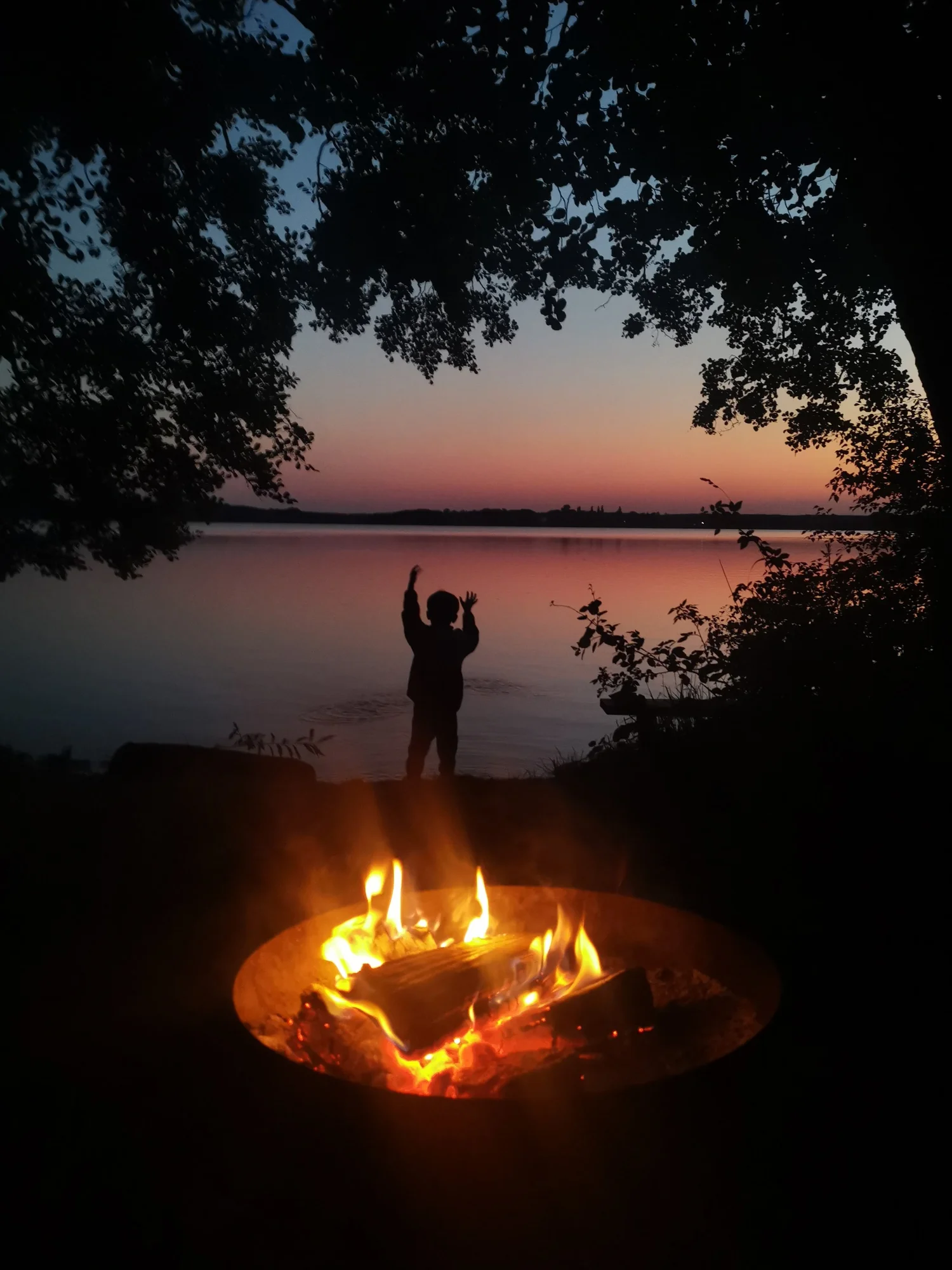
Valborg, in full Valborgsmässoafton, is one of the social turning points of the Swedish year. Officially the eve of May Day, unofficially the end of the long, dark winter. An evening when half of Sweden stands by some stretch of water or on some hill, watches a bonfire and breathes a sigh of relief.
And if you are new here, it is probably the moment when you first understand why Sweden works the way it does.
A brief history of Valborg
The name comes from Walburga, an English nun who worked in Germany in the 8th century and was canonised on 1 May. In central Europe, the night before became Walpurgis Night: a mixture of Christian feast and pre-Christian spring rituals. Witches, bonfires, wild goings-on. Goethe wrote about it in "Faust", and in Germany people know the name mainly from that context.
In Sweden, Valborg has become something else. No witches, no demons. Instead: a bonfire by the water, choral singing, a few speeches about spring, and then beer. Or schnapps. Or both.
The Swedish Valborg is less mystical and more communal. It isn't Halloween. It is closer to a secular version of Easter: a collective ritual that marks the turn of the year from winter to summer.
Why it matters so much to Sweden
Once you have your first Swedish winter behind you, you understand Valborg straight away. Winter here isn't simply cold, it's dark. In Gothenburg, at the end of December, the sun is only above the horizon for around six and a half hours. In Kiruna it doesn't rise at all.
That winter weighs on everything. On your mood, on productivity, on social rhythms. And at the end of April two things happen at once: the light comes back (in Gothenburg you have 15 hours of daylight on 30 April), and the trees visibly start turning green.
Valborg is the moment when this is officially acknowledged. No longer a private relief, but a shared one.
That is also why Swedes take Valborg more seriously than Germans take Walpurgis Night. In Germany, where I come from, we have mild winters and a gradual transition into spring. Here the transition is an event. And events need a date.
What really happens on 30 April
The pattern is surprisingly similar across the country, even if every town has its own traditions.
Afternoon: people get together, often at someone's home, for some early celebrating. Sill (pickled herring), crispbread, schnapps. In university towns like Uppsala and Lund, the student choirs start singing at midday.
Early evening: everyone makes their way towards the bonfire. Almost every municipality has an official valborgseld (Valborg bonfire): a fire by a lake, a river or on a hill. In Gothenburg the big spots are Slottsskogen, Skansen Kronan and the shore at Hinsholmen. In Stockholm: Skansen, Riddarholmen, Haga.
Around 9 pm: the bonfire is lit. At the same time a choir sings traditional spring songs, "Vintern rasat" and "Sköna maj, välkommen". Often someone says a few words about spring. Short, personal, nothing grandiose.
Afterwards: people stand around together, drink, talk. Many move on to parties, especially the younger ones. In Lund and Uppsala the student tradition gets really big: white student caps, champagne, sparkling wine on the riverbanks.
If you have the next day off (1 May, Labour Day and a public holiday), and you do, things get less controlled. 30 April is one of the few evenings in Sweden when you can be visibly drunk without anyone batting an eyelid.
Where to go in Gothenburg
Slottsskogen: the classic spot. A large park in the middle of the city, a central bonfire, the student choir of the University of Gothenburg, usually lots of families. Relaxed, not over the top. Start walking around 8:30 pm if you want a good spot.
Hinsholmen or Saltholmen: if you live on the coast or want to head towards the sea anyway, the small Valborg fires by the water are wonderful. Fewer people, more atmosphere. Not official every year, but often organised spontaneously.
Skansen Kronan: the old fortress hill in Haga. A good view over the city, a somewhat smaller fire, sometimes music. Good for anyone who wants to avoid the big park.
At someone's home: if you're invited, go. Valborg at home with Swedes is one of the quickest ways to understand the country. Bring flowers or a bottle of wine. Eat the herring, even if you don't like it.
What might puzzle you at your first Valborg
The timing: the official part (fire, singing) often lasts only 20–30 minutes. If you arrive late, you've missed it. The rest is standing, talking, drinking.
The songs: "Vintern rasat" sounds like a school anthem. But for many Swedes it is emotional. You don't have to sing along, but respect the moment.
The sobriety before 8 pm: Valborg isn't a carnival. The first part of the evening is formal, almost solemn. It only loosens up after the fire.
The schoolchildren: some schools give 30 April off, others don't. 1 May is the public holiday. For many families the combination makes a long weekend, and in that sense Valborg is the kick-off.
The underrated calendar anchor
If you are planning a long-term move to Sweden, it is worth putting Valborg in your calendar. Not because you have to celebrate it exactly like a Swede, but because it is one of the few collective moments in the Swedish year when the whole country pulls in the same direction.
Midsommar is one. Julafton (Christmas Eve) is the second. Valborg is the third. Three dates on which Sweden doesn't work as usual: shops close early, emails go unanswered, and no appointments are made.
Once you know that, you plan differently. You don't schedule a flat viewing, a bank switch or a visit to the authorities on 30 April. Instead you block out the evening and go to the bonfire.
The difference between someone who really lives in Sweden and someone who merely resides here often lies in dates like these.
What stayed with me from my first Valborg
In 2022 I stood in Slottsskogen, maybe 500 metres from the fire, because I was late. The choir sang. I didn't understand a single word. All around me were people quietly singing along, or at least swaying to the rhythm.
And I thought: okay, this is a country where winter is not treated as a joke, but as an opponent. And Valborg is the moment when people turn around and say: we made it through again this time.
That is the right way to see Valborg as a newcomer. Not as a spectacle. As an annual confirmation that it is getting lighter.
Thinking about moving to Sweden? My free roadmap for the Swedish authorities takes you step by step through your first month, from personnummer to BankID.
