Buying a summer house in Bohuslän: prices and tips for 2026
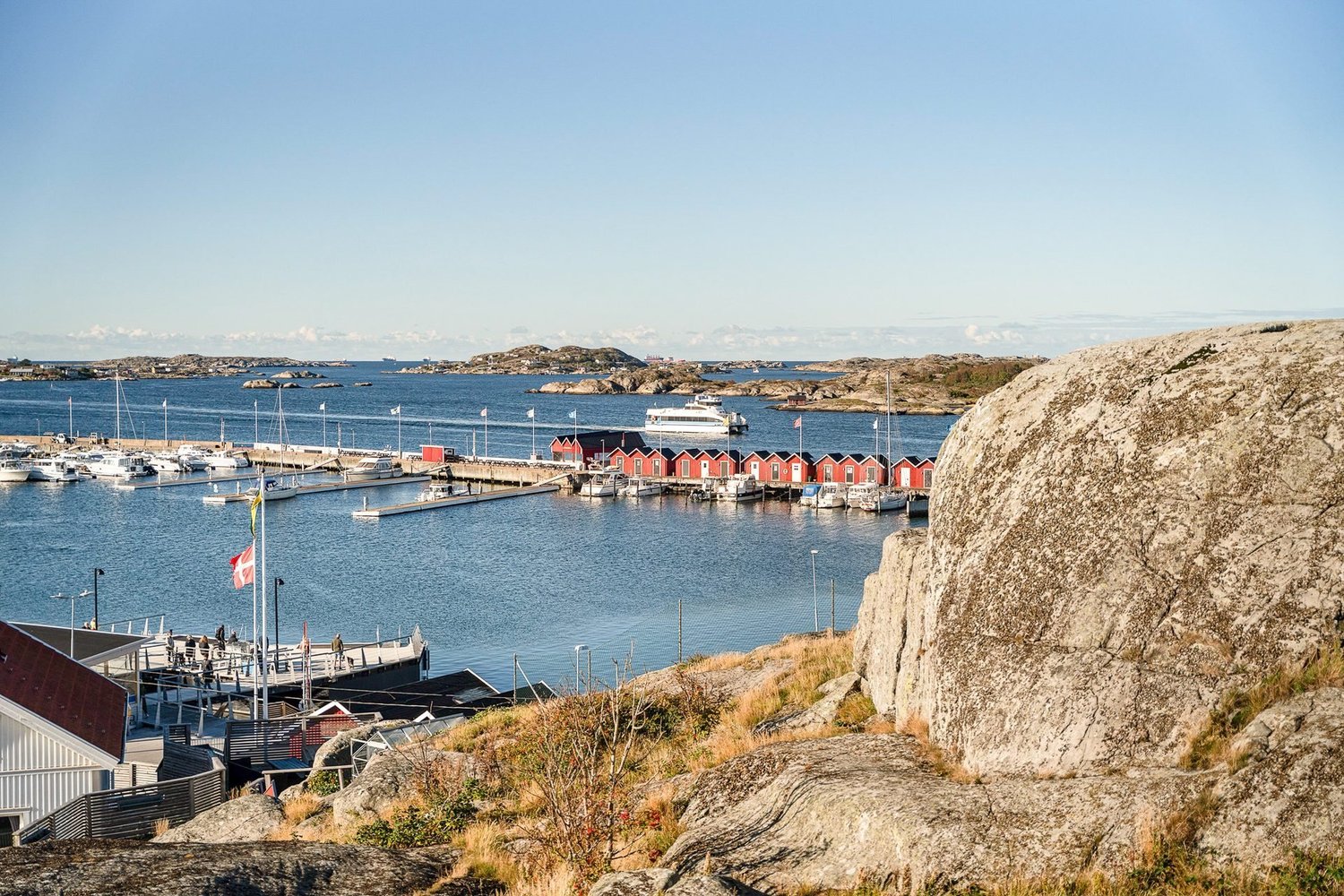
Bohuslän starts north of Gothenburg and stretches 150 kilometres up to the Norwegian border. Granite rocks rising out of the sea. Red boathouses standing on stilts. And a coastline so open on a clear day that you feel the whole North Sea is right on your doorstep.
I've been coming out here regularly for four years: to surf, to take photographs, and now also to look at properties for clients. And one question almost always comes first: What does a summer house actually cost here?
The honest answer: depending on where you look, between 1.2 million and 15 million kronor. And the difference isn't random. It follows a logic you should understand before you click on your first Hemnet link.
One point that matters especially for a coastal house: under standard terms, storm cover only kicks in from 21 m/s, and several insurers exclude bryggor (jetties), sjöbodar (boathouses) and bathing huts. Read what the villaförsäkring (house insurance) really covers before you buy, not afterwards.
The three price brackets in Bohuslän
Bohuslän isn't one uniform market. There are roughly three zones, and they behave completely differently, both in price and in resale value.
Zone 1: the island gems (Fjällbacka, Grebbestad, Smögen, Marstrand). This is where you find the prices you see on Instagram: 5 to 15 million SEK for a smaller stuga with a sea view, 20 million and more for a renovated house with its own jetty. In April 2026, a well-kept 90 m² house in Fjällbacka with an archipelago view was for sale at 7.9 million SEK. For most buyers from abroad this zone isn't realistic, but it's good to know because it influences prices in the neighbouring zones.
Zone 2: the middle ground (Tjörn, Orust, Lysekil, the hinterland of the main islands). This is where the real market happens. A solid summer house of 60–80 m², 15–30 minutes from the water, currently costs between 2.5 and 4.5 million SEK. If you can walk or cycle to the water, prices are 4 to 6.5 million. The jump is real: in Bohuslän, a location right on the water costs roughly 40–60% more than one two streets inland.
Zone 3: the hinterland (Munkedal, inland Tanum, the Dalsland border). Here you can still find houses from 1.2 to 2.5 million SEK. They're often timber houses from the 1960s and 70s that need renovating. If you're handy or have a builder you can call on, this is where you'll find the best value per square metre in the whole of southern Sweden. The downside: resale values rise much more slowly than on the coast.
What the asking price doesn't tell you
Now for the part you'll almost never read in guides written for foreign buyers. When Hemnet says 3.5 million SEK, that doesn't mean you'll pay 3.5 million SEK.
First: in Sweden the utgångspris (asking price) is often bait. The official measure is called budpremie (bidding premium) and in March 2026 it stood nationally at +1.1% for flats and −1.1% for houses. The average includes everything that sells at the asking price without a single round of bidding. For sought-after properties in Bohuslän it's a completely different picture: what matters isn't the average but whether two people want the same house. For truly prime properties on the coast I've seen final prices 40% above asking. The asking price is an invitation to bid, not the final price.
Second: the transaction costs. The transfer tax is called stämpelskatt and is 1.5% for private individuals, assessed on the higher of the purchase price and the taxeringsvärde (tax assessment value), not automatically on the purchase price. On top of that comes 2% on every newly issued pantbrev (mortgage deed), an 825 SEK fee for the lagfart (registration of title) and 375 SEK per pantbrev. Existing pantbrev pass to you and cost nothing, so ask about them before you bid. On a purchase over 4 million SEK with no existing pantbrev, you're quickly looking at 200,000–250,000 SEK in additional transaction costs.
Third: the running costs. Property tax (fastighetsavgift) is cheap in Sweden: 0.75% of the taxeringsvärde, capped at 10,425 SEK for the 2026 income year. The cap is the decisive part: without it, the percentage on a coastal house would be a very different number. But insurance, electricity, water, snow clearing in winter and road association fees for road maintenance add up to 25,000 to 50,000 SEK a year, depending on the property. And if you don't winterise the house yourself, you'll pay a caretaker service (fastighetsskötsel) an extra 15,000–30,000 SEK.
The point almost everyone overlooks: servitut and shoreline protection
Bohuslän is one of the most heavily protected coastlines in Europe. Swedish shoreline protection (strandskydd) generally prohibits any new building within 100 metres of the water, and in many places it's even 300 metres. Existing houses may stay, but every larger extension, every new jetty, every new outbuilding needs an exemption. And exemptions are rarely granted.
That has two consequences. For you as a buyer: check carefully what's legally possible on the plot before you buy. A house with an old, registered jetty can be worth hundreds of thousands more than an identical house without one. The information is in the detaljplan (local development plan) and in the property register (Lantmäteriet). A good estate agent or lawyer will pull the documents before you bid.
For the market as a whole: Bohuslän isn't being built up. That's the structural reason why prices here rise in the long run, even when the Swedish property market is otherwise weak. Supply is effectively capped. You're buying into a region where the law says no more building is allowed.
Why April and May are the right time to look
The Bohuslän summer-house market has a clear annual rhythm. From mid-May to mid-August, prices run hot. Germans, Norwegians and Stockholmers come on holiday, see the house in sunshine above the rocks and bid emotionally. No statistic tells you what that costs in an individual case: the budpremie averages across all sales and was around one per cent either way in March 2026. What I see in the summer months for well-located properties in Bohuslän is significantly higher. That's what I've observed in practice, not a statistic, and I want to be clear about that.
In April and the first half of May the market is calmer. Many of the properties on Hemnet now didn't sell during the autumn season, which means they're either less well located or have too high an asking price. Both are negotiating points. For determined buyers this is the best time to get in without a bidding war, negotiate a price, and get the water tests, the chimney inspection and the moisture measurement done before the summer starts.
What I'd recommend
If you're thinking about a summer house in Bohuslän for the first time: go there yourself before you buy. Not in August. In November. If you can still like a summer house in grey late autumn, in wind and rain, it's the right one. One that only works in sunshine will become a burden by the third year.
If you're searching seriously, you should:
Set a budget ceiling including a 5% buffer for transaction costs and an 8% buffer for bidding above asking
Choose your zone honestly; for most buyers from abroad, Zone 2 is the sensible middle way
Before every bid, hire a besiktningsman (independent surveyor) to go over the property: around 9,600 to 10,800 SEK for a detached house, terraced house or fritidshus (Anticimex, basic level), more for larger properties, and the best investment of the whole process
Have a Swedish lawyer support the purchase and check strandskydd, servitut (easements) and the detaljplan
Bohuslän isn't an investment that makes you rich in three years. It's a place you'll want to drive to in ten years because you've built a second rhythm of life that you could no longer have back home. That justifies the price, if that's the reason you buy.
Further reading on Nordabenteuer:
The Swedish property market in spring 2026: buy now or wait?
Bohuslän in spring: why now is the best time for a scouting trip to the West Coast
Would you like personal advice? I guide people from abroad through buying property in Sweden, from the first viewing trip to completion. Book a free 15-minute intro call.
Buying a house in Sweden: practical guide, the in-depth guide on this topic, is currently available in German: see it in the shop.
I'm Sebastian Schiefner, a photographer in Gothenburg, and I help people who are moving to West Sweden with finding a home and buying property. Free intro call.
