Moving to Gothenburg with children: a parents' guide for 2026
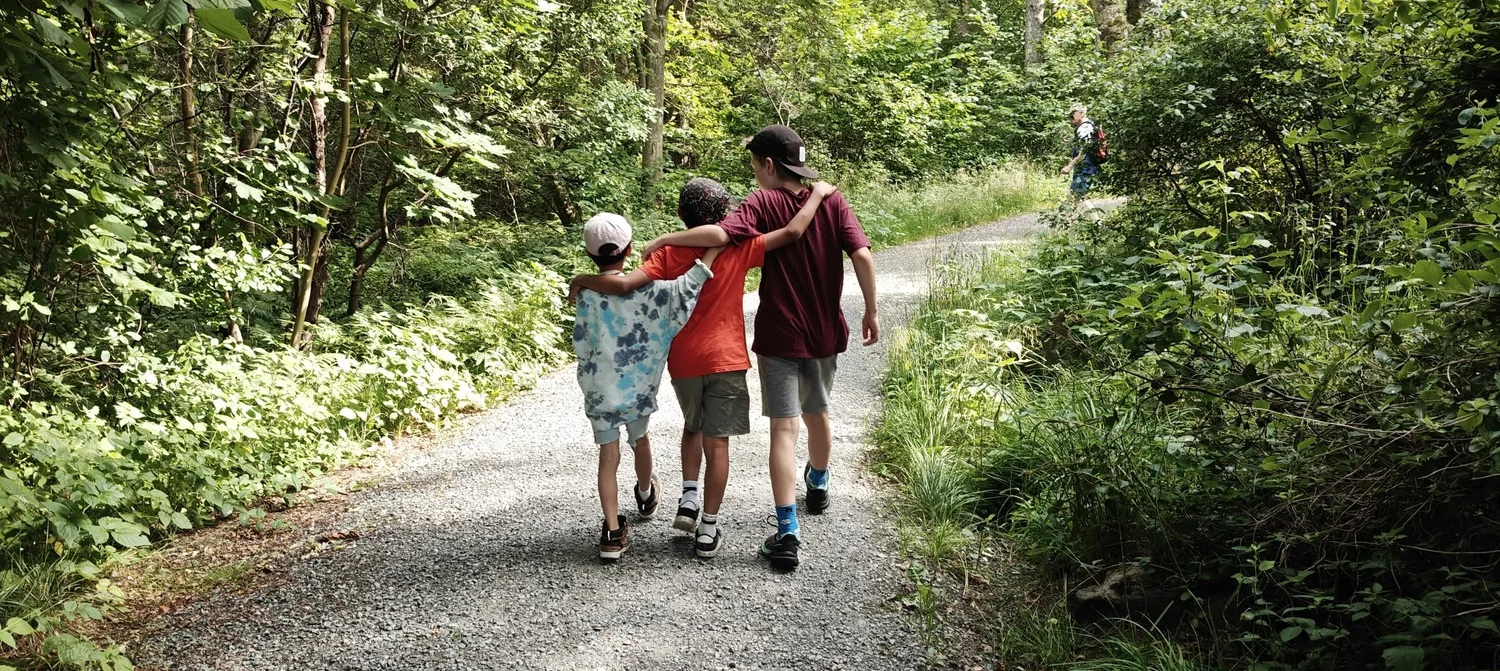
If you're thinking about moving to Sweden as a family, the question of the children often comes up first, and it's the only one whose answer really decides whether you take the step or not.
I regularly get messages from parents who have the whole thing on the table: buying a house in Bohuslän, a job offer in Gothenburg, a Swedish partner. The sticking point is almost always the same: "What do we do about the children?"
This article answers that question in the order in which it really comes up, not in the order the authorities would sort it.
The Swedish system in one minute
Sweden's education system may run on a different rhythm from the one you know at home. Here are the essentials at a glance before we go into detail:
- Förskola (preschool/nursery): children from age 1 to 5. Full-day, professional, heavily subsidised.
- Förskoleklass: a compulsory year from age 6, a kind of preschool class within the primary school.
- Grundskola (compulsory school): years 1–9, from age 7. Compulsory schooling until 16.
- Gymnasium (upper secondary school): optional, three years, with programmes to choose from (preparing for university or vocational training).
The Swedish system isn't organised by region (in Germany, for example, schools are run by the federal states) but by kommuner, the municipalities. The City of Gothenburg runs several hundred förskolor and well over a hundred compulsory schools. The exact number changes all the time; the city lists them on goteborg.se. Alongside them there are independent schools (friskolor), which are state-funded but privately run.
Förskola: registration, waiting time, maxtaxa
If your child is under 6, the path starts with förskola. Registration is entirely digital, through the platform forskola.goteborg.se. You need a personnummer and BankID for it.
Waiting times, realistically: the City of Gothenburg guarantees a place within four months of registration. In central neighbourhoods (Linnéstaden, Vasastan, Majorna) your preferred förskola may be full, in which case you'll be assigned another one. Places are allocated chronologically by registration date, with priority for siblings and for living nearby.
A registration tip from experience: if you're planning the move and roughly know the date, register your child six months beforehand. All you need is the personnummer and the tenancy agreement; everything else is sorted out at the intake meeting. Registering costs nothing, commits you to nothing and moves you up the list.
What förskola costs in Sweden
Sweden has a nationwide cap on fees, the maxtaxa. On 1 July 2026, Gothenburg lowered it and introduced an allowance. These are the rates since then:
Children aged 1 to 3:
- 1,547 SEK per month for the first child (around €135)
- 1,031 SEK for the second child
- 516 SEK for the third child
Children aged 3 to 5, where it gets considerably cheaper:
- 1,031 SEK for the first child
- 516 SEK for the second and third child
From the fourth child onwards, childcare is free.
Two things that many guides leave out: since July 2026, 10,000 SEK is deducted (fribelopp) from the household's gross income on which the fee is based, and above an income of 51,560 SEK a month the fee doesn't rise any further. If your household earns less than 10,000 SEK in total, you pay nothing at all.
This applies to a full-time place (about 40 hours a week). If you register for a part-time place, you pay pro rata. From age 3, the first 525 hours a year are free anyway, the so-called "allmän förskola" (universal preschool). The rates are adjusted every year; the current table is published by the City of Gothenburg.
Compared with childcare fees in Germany (often €200–500 a month), that's cheap. Compared with Berlin or Hamburg, where childcare is free, it's more expensive. Quality is similar across the board, with one difference: in my view Swedish förskolor are considerably more consistent in their methods and the staff better trained than the German average.
School: where your child ends up, and whether you can influence it
In the year your child turns 6, förskoleklass begins: a compulsory year, a kind of preschool class, but attached to the primary school.
Registration takes place in the autumn of the previous year through the city's school choice system. You list three preferred schools. The municipality allocates places according to three criteria:
- Proximity to home (a journey to school under 1 km is preferred)
- Siblings
- Random selection between equally ranked applications
If you live in Vasastan, you'll very probably get Vasaskolan. If you live on Hisingen, you can choose between several schools. If you live in a popular area with scarce school places (e.g. Bagaregården, Kålltorp), find out early. Some schools are full year after year.
Friskolor: Sweden's independent schools
There are also friskolor: privately run schools that are state-funded and not allowed to charge fees. They follow the Swedish curriculum and often have a particular educational focus (Montessori, Waldorf, Reggio, IT-focused, bilingual).
Gothenburg has several dozen friskolor. You register directly with the school, not through the municipality. Children are often put on waiting lists at birth, and that's no exaggeration.
Of practical interest for German-speaking families: there's Tyska skolan (the German School Gothenburg). It runs from förskola to year 9 following the German and Swedish curricula, is state-recognised, charges no fees (it's a friskola) and is a real bridge for families who want to ease into Swedish school life slowly or keep the option of returning to Germany open. Places are scarce. If your move is taking shape, send them an email now.
Language: the honest answer
The most common point where parents hesitate: "How is my child supposed to manage?"
The honest answer: very well, and probably better than you.
Children under 7 pick up enough Swedish in förskola within three to six months to communicate. By the end of the first year, language is usually no longer a barrier.
School children between 7 and 12 take longer: about a year for everyday language, two for school level. Swedish schools have their own programme for this: svenska som andraspråk (SVA, Swedish as a second language). Your child joins the class from the start but also gets targeted language lessons.
What you as parents can do, and what you can't: you can keep speaking your own language at home (and you should, it keeps the first language stable). You can't prepare your child's language leap by "learning a bit of Swedish" with them in advance. That overloads the family and slows down the natural acquisition in förskola.
My observation: the children who settle in fastest here are the ones whose parents radiate calm. If you as a parent are stressed about the language yourself, your child picks up on it. As an adult you learn Swedish with SFI (free of charge, alongside settling in). Your child does it on the side in förskola.
Practical preparation: what you can sort out before the move
Much of a family move to Sweden requires a personnummer and a tenancy agreement, and you'll only have those once you're here. But there are three things you can do beforehand:
- Gather school reports and records of previous year groups. Swedish schools want an overview of previous year groups and language skills. Certified translations aren't needed; simple translations (even DeepL) are enough.
- Contact Tyska skolan, if it's an option for you. The waiting lists are real.
- Sort out your children's health cover. Within the EU, the EHIC card covers transition periods; in the long term you need Swedish cover through Försäkringskassan, which applies automatically once you're registered with a personnummer.
If you're coming with children under 1: you'll fall under the Swedish föräldrapenning system (parental benefit). The conditions are more generous than in Germany, for example: 480 days of paid parental leave, freely divisible between both parents. That's a topic of its own, and I'm covering it in a separate article.
What really matters
When I look back on four years of watching newcomer families in Gothenburg, I see a pattern: the families who do well don't treat the move as an educational project for the children, but as a life decision by the parents that the children share in.
That's a difference. Children sense when their parents apologise for something that's actually good for everyone. Sweden is child-friendly, almost excessively child-friendly compared with Germany, where I come from. The playgrounds, the collective culture in förskola, the way people behave in public spaces, friluftsliv as a matter of course. Once you've seen it, you no longer feel you're taking something away from your children; you feel you're passing something on.
Still: the transition takes time. Allow at least six months for settling in, and a year for the feeling that everyone has arrived. There will be some bumps along the way. That's not a sign that you've done something wrong.
If your plans are taking shape
If you're facing the question of whether a move with children is realistic, start with my authorities roadmap, which sets out the registration steps for Skatteverket, Migrationsverket and Försäkringskassan in the right order.
If you have a specific question about your family's situation (number of children, choice of neighbourhood, school or förskola options), write to me or book a free 15-minute intro call. I can't take every educational question off your hands, but I can help you sort out the bureaucratic and logistical path. That much I can do.
Sweden with children isn't the riskier path. It's just the one that needs more thorough preparation.
Buying a house in Sweden: practical guide, the in-depth guide to this topic (currently available in German): view it in the shop.
I'm Sebastian Schiefner, a photographer in Gothenburg, and I help people who are moving to West Sweden with finding a home and buying property. Book a free intro call.
