Setting up Swish in Sweden (2026)
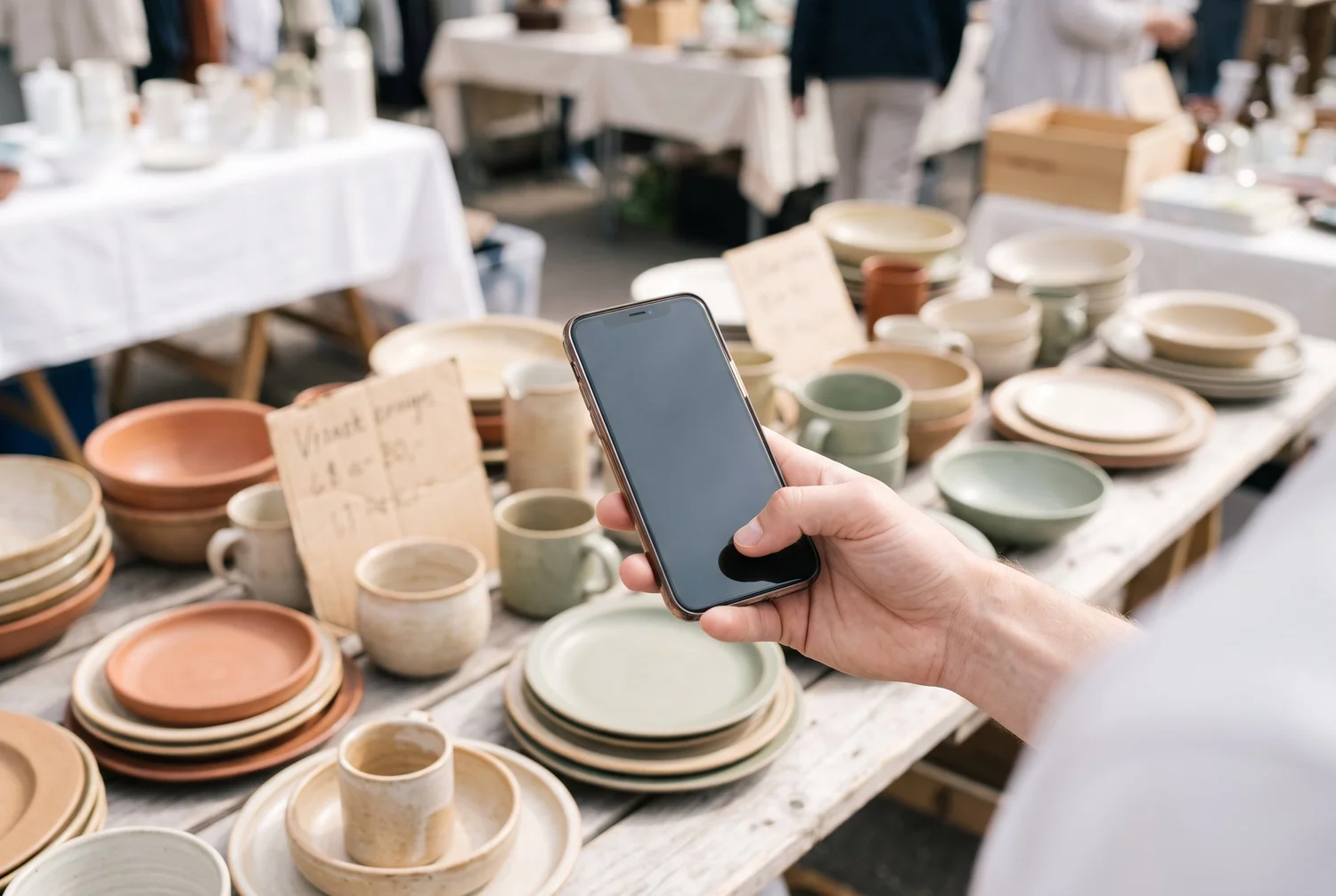
There's a moment that every newcomer to Sweden runs into sooner or later. You're at a loppis (flea market) in Majorna, you've spotted an Eames-style chair knock-off for 400 kronor, you reach for your wallet, and the seller asks: "Swish?"
When you shake your head, nothing dramatic happens. She shrugs, smiles politely, and the chair goes to the next person. You walk home without a chair and with a quiet suspicion that you've just missed out on something everyone here has.
You have.
In Sweden in 2026, Swish isn't "one of many payment apps". Swish is the app. Well over eight million people in Sweden use it, and for everyday micro-transactions (the flea market, club fees, your half of a restaurant bill, the cake at the förskola summer party, a piece of furniture off Blocket, the collection basket at church) it is simply the only thing anyone expects. Without Swish, you're left out of that whole system.
I underestimated this in my first three months in Gothenburg. I came from Berlin and thought: cash, card, Apple Pay, that'll do. It did for the supermarket. For everything else, the informal, social, quick stuff, I became the foreigner holding up the group because he was counting coins or hunting for bank details in his notes app.
This article shows you the order in which Swish actually works, and why the app isn't the first step but the third.
What Swish really is (and what it isn't)
Swish is a real-time transfer between Swedish bank accounts, triggered by the recipient's mobile number. No IBAN to type in, no delay, no "it'll arrive by 1 pm". You enter a Swedish mobile number, approve the amount with BankID, and the money is in the other account in the same breath.
What Swish isn't:
- Not PayPal. There's no seller protection and no buyer chargeback. Once it's swished, it's gone. With strangers the rule is either "money first, then hand over" or "hand over, then money", depending on who carries the risk.
- Not Apple Pay. You don't pay with Swish at the supermarket, the café or the petrol station. That's what your card or Apple Pay is for.
- Not a Wise competitor. Swish only works between Swedish accounts. Sending money back to your home country still goes by a regular bank transfer (SEPA, if you're in Europe) or via Wise.
The right analogy: Swish is what cash used to be in many countries. The universal, frictionless micro-currency for everything that happens between private individuals or small sellers.
Why Swish became so dominant in Sweden
Founded jointly in 2012 by six Swedish banks (Swedbank, SEB, Handelsbanken, Nordea, Danske and Länsförsäkringar), Swish managed in ten years what generations of "instant transfer" services in Germany, for example, never did: it became a standard. Because all the banks are in it, there's no app lock-in. You switch banks, Swish stays.
Then there's the cultural side. Sweden already has the lowest amount of cash in circulation in Europe, and many banks no longer even accept physical cash at the counter. When a country has de facto done away with its 50-kronor notes, it needs a replacement for the small amounts where a card is clumsy. Swish is that replacement. And because it arrived early enough, it has become deeply embedded in everyday life.
To give you a picture: my neighbour's ten-year-old swishes. His grandfather swishes. The pizza delivery guy swishes. The nursery party swishes. When I used to say in Germany "I'll transfer it to you tomorrow", that was a promise with an uncertain deadline. When I say here "jag swishar dig" ("I'll swish you"), it's a matter of twelve seconds.
The three prerequisites, in the right order
This is where it gets practical, and where most newcomers who want to "just quickly set up Swish" come unstuck. Swish is the top level of a three-part pyramid:
1. Swedish bank account (with a foreign or a Swedish address, whichever bank)
2. BankID (Sweden's digital identity, issued only through your bank)
3. Swish app (on your smartphone, linked to bank account + BankID + mobile number)
No 1, no 2. No 2, no 3. If you go to the App Store on your third day in Sweden with your passport in your pocket and download Swish, you can open the app, but you can't activate it.
So if you want Swish, you have to think in this order. Most new arrivals only get their Swedish bank account after their personnummer (the Swedish personal identity number; see my bank account article: Wise works as a bridge, but Wise won't give you BankID). In plain terms: Swish typically comes four to eight weeks after you arrive, once the personnummer has come through and the bank account is open.
If you have that clear in your head beforehand, you plan your first weeks differently: carry a small cash reserve, have a contactless card ready, and don't get too annoyed when you miss out at a flea market. It's a transition phase, not a permanent state.
Step by step: setting up Swish
Once the prerequisites are in place (bank account and BankID active), the setup itself is trivial:
1. Download the Swish app from the App Store or Google Play. The app is simply called "Swish", and the publisher is Getswish AB. There are copycat apps with similar names, so check the publisher, not just the name.
2. Open the app and log in with BankID. The app asks for your Swedish mobile number. Important: it has to be a Swedish number, so +46. A foreign number (a German +49 number, for instance) won't work. Swish is tied to the Swedish telecom infrastructure because the number is your identifier for other users.
3. Link your bank account. You choose which account Swish payments go out from. With Swedbank, SEB, Handelsbanken and Nordea that's one click. If you have several accounts (current account + savings account), choose the current account.
4. Set a PIN or turn on Face ID. The default is Face ID on iPhone and fingerprint on Android. Authentication happens with every payment, not just when you open the app.
5. Make a first test transaction. Send yourself one krona, or swish 1 SEK to someone you trust as a test. You'll see: from tapping to confirmation on the other end takes under 15 seconds.
That's it. From now on you pay the flea market, the pizza guy, the nursery fund and your share of the restaurant bill via a mobile number.
Limits and staying safe
By default, Swish isn't unlimited. The limits are set by your bank, not by Swish. Depending on the bank, the daily limit is somewhere in the low to mid five-figure kronor range, usually with a monthly limit on top. You'll find your own limits in your bank app. You can adjust the limits in your bank's app (not in the Swish app itself), usually upwards in steps of 10,000 SEK, confirmed with BankID.
If you sell a car privately in Sweden or transfer a deposit for a bostadsrätt (a cooperative flat), you'll notice quickly: 200,000 SEK goes via Bankgiro or a regular bank transfer, not via Swish. Swish remains the micro channel.
Safety points to keep in mind:
- Swish fraud is real. The most common scam: someone "calls you", supposedly from the bank, stages a "verification", gets you to open BankID, and in that moment you yourself pay money to the fraudster, because the app shows the transaction correctly but you're under pressure and don't look. Rule of thumb: a bank will never ask you to open BankID while it's on the phone with you.
- With strangers, initiate payments yourself rather than responding to a "Swish request". Sellers on Blocket sometimes send payment requests ("begäran"). They feel like a one-click payment, but they're requests that you trigger yourself. If you confirm mechanically with BankID, the money is gone.
- Always check the recipient quickly. After you enter the mobile number, the app shows the registered name. If instead of "Anna Lindgren" it suddenly says "Andreas L.", you've mistyped the number.
What Swish changes in everyday life
Once Swish is up and running, you notice just how many small frictions it removes:
- The restaurant bill split four ways? One person pays by card, the other three swish their share within a minute of the receipt landing on the table.
- The Sunday flea market in Haga, where the seller smiles at you and points to the laminated A4 sign with her mobile number? Tap, swish, done.
- The förskola summer party, where parents sell cake for the class fund? You give the dad at the table fifty kronor through the app, not into the cardboard box.
- Membership of the sailing club, the dog club, the hembygdsförening (local heritage society): it all runs on Swish payments with a reference instead of an annual invoice.
- The spring party in your Swedish neighbourhood, where a neighbour collects deposit bottles and forwards the money via Swish to the bostadsrättsförening (housing association).
It's not one app among many. It's the app without which you're standing at the edge of social life in a thousand small places.
Questions newcomers often ask
Do I need a Swedish SIM card?
Yes, because the Swedish mobile number is the identifier. A foreign number on eSIM roaming isn't enough. Swish is tied to +46. Once you have your personnummer and BankID, you can get a regular number from Comviq, Hallon or Telia, often as prepaid for 50–100 SEK a month.
Does Swish work abroad?
You can send and receive Swish transactions from abroad as long as your phone has an internet connection. The app itself has no geo-block. The recipient or sender just needs a Swedish bank account + a Swedish number.
Can I have Swish without a personnummer?
In theory yes, if your bank has given you an account + BankID without a personnummer (some banks do this with a samordningsnummer, a coordination number). In practice almost never. In 2026 most banks only issue BankID with a personnummer.
What does Swish cost?
For private individuals, 0 kronor. No transaction fees, no monthly costs. For businesses (Swish Företag) there are tariffs, because the banks earn from it, but as a private user that doesn't affect you.
What happens if I leave Sweden again?
As long as you keep your Swedish account, Swish keeps working. Close the account and Swish goes too. If you leave Sweden and keep the account without using it actively, it's still worth keeping the app usable. Many Swedes stay in touch digitally with their sambo (partner), family or friends this way, because money transfers via Swish are easier than collecting IBANs.
My honest advice to finish
When you move to Sweden, Swish will cause you some stress in the first few weeks. The app is the crowning piece of the bureaucratic pyramid of personnummer, bank account and BankID, and that's why it only comes once all the other pieces are in place. Don't try to shortcut it.
What you can do: carry a cash reserve during this transition (a few hundred kronor in 100-kronor notes), keep your card ready, and at every flea market, every club fee, every split bill, explain cheerfully "jag är ny här – swish kommer snart" ("I'm new here, Swish is coming soon"). Swedes are used to this and nobody will make it awkward. What they will notice is that you know the process and that it's only a matter of weeks, not of principle.
Once the app works, you've arrived. Not in the bureaucracy, that was sorted earlier, but in the informal, small-scale everyday life that makes Sweden what it is. A chair in Majorna for 400 kronor, three seconds of BankID, done.
Further reading:
- Opening a bank account in Sweden: the three routes
- Setting up BankID: Sweden's digital identity
- Applying for a personnummer: the complete guide
Buying a House in Sweden: Practical Guide, the in-depth guide on this topic, is currently available in German: see it in the shop.
I'm Sebastian Schiefner, a photographer in Gothenburg, and I help people who are moving to West Sweden with finding a home and buying property. Free intro call.
