How to check a bostadsrättsförening: the buyer's guide
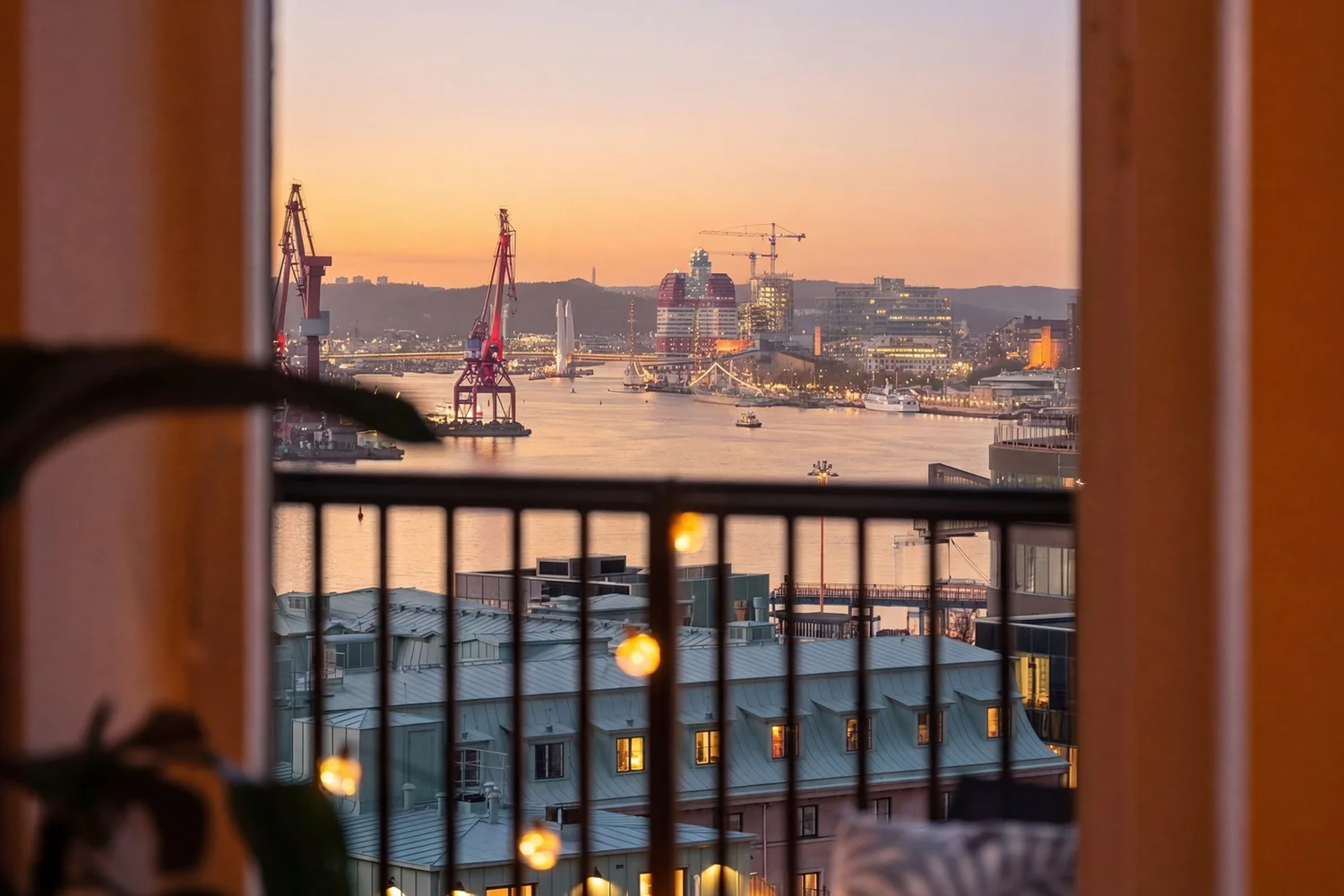
If you buy a flat in Gothenburg, in most cases you are not actually buying a flat. You are buying a share in a housing cooperative, the bostadsrättsförening (BRF for short), and with that share the right to live in one specific flat for an unlimited period. At first that sounds like legal hair-splitting. But it is the single most important difference between a Swedish bostadsrätt and the owner-occupied flat you may know from home, and it is the point where buyers from abroad most often lose money.
The reason: the förening has its own budget. It takes out loans, it maintains the building, it builds up reserves for the next roof renovation, or it doesn't. And as a member, you carry everything in the förening's budget through your monthly avgift (the association fee). A beautiful flat in a run-down förening is, over ten years, a more expensive investment than an ordinary flat in a well-run one.
In this article I'll show you what you need to look at before you buy, where the most common pitfalls are, and which figures in the årsredovisning, the förening's annual report, actually tell you something.
Checking the förening is part of your preparation. The full buying process in Sweden shows when this check is due and what comes before and after it.
What a bostadsrättsförening actually is
A bostadsrättsförening is an economic association under the Swedish Bostadsrättslagen (the Tenant-Owner Act). It owns the building or buildings in which the bostadsrätter are located. Each member owns a share, typically expressed as a percentage or a fraction, and with that share the nyttjanderätt, the right of use, to one specific flat.
In practice this means you can sell the flat, leave it to your heirs, let it out (with permission) and renovate it (with permission). But the walls belong to the förening, the roof belongs to the förening, the lift belongs to the förening. And everything the förening maintains or replaces, you pay your share of through your monthly avgift.
So the avgift is not a flat-rate service charge of the kind you might know from owning a flat elsewhere (in Germany, for example, the Hausgeld). It is your membership fee in an organisation whose only purpose is to run the building you live in. If that organisation is badly managed, your avgift goes up. If it is well managed, it goes down, or stays stable for decades.
The key lever: the årsredovisning
Every bostadsrättsförening in Sweden is legally required to produce an årsredovisning, an annual report, every year. As a buyer you get it from the mäklare (estate agent) on request; if you don't get it, that is already a warning sign. I don't know a single reputable mäklare in Gothenburg who would refuse it.
The årsredovisning runs to 20 to 60 pages and has three parts that really matter for your decision: the directors' report (förvaltningsberättelse), the balance sheet (balansräkning) and the income statement (resultaträkning). The notes and the auditor's report complete the picture.
What you're looking for is not the board's nice sentences about last summer's courtyard planting. What you're looking for is six specific figures.
The six figures that really matter
One: debt per square metre. In the directors' report or the notes you'll find the förening's long-term loans. Divide that total by the combined living area of all the bostadsrätter. The result is the belåning per kvadratmeter. As a rough guide for Gothenburg: below 5,000 SEK/m² is healthy, 5,000 to 10,000 SEK/m² is normal, 10,000 to 15,000 SEK/m² is elevated and should make you look closely, and above 15,000 SEK/m² is a red flag you should only accept if you know the reason for it (for example a new build in its first years that was deliberately financed with high debt).
Why it matters: when interest rates rise, the avgift rises. A heavily indebted förening hits you twice at the next refinancing, once as a member who has to pay, and once as a seller, because a heavily indebted förening drags down the market value of your flat.
Two: interest cost per square metre per year. The årsredovisning shows the förening's interest expense. Divide it by the living area. If the result is above 300 SEK/m² per year, the förening is vulnerable in the current high-interest phase.
Three: avgift per square metre per year. Take the monthly avgift times twelve and divide it by the living area of your flat. In Gothenburg, healthy bostadsrätter sit between 600 and 900 SEK/m² per year. If your förening is well below that, it is rarely a bargain. More often it is a sign that the avgift is being kept artificially low and an increase is on its way. If it's above, ask why: an ongoing renovation? High maintenance costs for an old building? Both can be legitimate.
Four: the förening's equity. A BRF with positive equity that grows over the years has financial room to manoeuvre. A BRF that scrapes by each year just short of a loss, or posts losses, is just kicking the can down the road. Look at the last three to five årsredovisningar, not just the current one. The mäklare usually has them ready as a PDF bundle.
Five: renovations planned and completed. In the directors' report, the board lists what has been renovated and what is planned. Pay particular attention to the expensive items: stamrenovering (replacing the water and drain pipes, in Gothenburg usually every 50–70 years), façade renovation, roof, lift, balconies. A förening announcing a stamrenovering within the next five years will raise the avgift or ask for a special levy, sometimes both. A förening that completed and paid for its stamrenovering ten years ago is ahead of the game.
Six: the underhållsfond, the maintenance reserve. The balance sheet shows the current level of the yttre underhållsfond (the external maintenance fund). Check whether money is added every year (good) or whether the reserve has stagnated or shrunk for years (bad). A healthy BRF in Gothenburg adds 100–200 SEK/m² to the reserve each year.
The board: the blind spot that gets expensive
Something that isn't in the årsredovisning but matters just as much: who sits on the board?
Bostadsrättsföreningar are run by members on a voluntary basis. Large föreningar with 100+ flats often have a professional management company in the background (Riksbyggen, HSB, SBC) handling day-to-day operations. In smaller föreningar, and Gothenburg has plenty of those, especially in the lovely pre-war buildings in Vasastan, Linné and Majorna, the board does almost everything itself. Three to five residents organise tradespeople, commission repairs and negotiate loans with the bank.
An experienced, stable board with low turnover is worth its weight in gold. A revolving-door board where nobody stays longer than two years, which switches back and forth between management companies and shows regular conflicts in the minutes of the annual meeting, is an operational risk. The årsredovisning won't tell you much about the board, but you can ask about it. A good mäklare will answer openly; a bad one will dodge.
Ask specifically: who is the ordförande (chair), and since when? How often does the board meet? Is there external management, and if so, which company? A "we manage everything ourselves" in a 30-flat förening without management can be charming, or it can be a sign that the board is structurally overstretched. Listen carefully.
Special levies: the earthquake newcomers rarely see coming
If the förening can't or won't fund a major renovation through the avgift or a new loan, there is a third instrument: a capital contribution increase or special levy. That means every member has to pay a larger one-off sum into the förening, typically several tens of thousands up to a hundred thousand SEK per flat, depending on the share and the scope of the renovation.
Special levies have become more common in Gothenburg in recent years, because many föreningar are facing a stamrenovering or façade renovation, and because since 2023 the banks have become more reluctant to keep financing heavily indebted föreningar.
What you need to check as a buyer: has the förening decided on, or discussed, a special levy in the last five years? Where do you find that? In the minutes of the stämma, the annual general meeting. These minutes are also available to buyers, but you have to ask for them. If the mäklare hesitates: red flag.
And the more important point: what's coming in the next five years? A BRF with an old stamrenovering and a weak underhållsfond is a likely candidate for a special levy, even if nothing has been decided yet. When you buy, you don't inherit the förening's past, but you do inherit all its future decisions.
The real red flags
From three years of helping buyers from abroad in Gothenburg, and from the conversations with mäklare I've had for nordabenteuer.de, these are the patterns I most often see as warning signs:
A förening whose directors' report shows no renovation planning for the next ten years either has a weak board or is hiding something. A professional förening has an underhållsplan (maintenance plan) and communicates it openly.
A förening whose avgift hasn't gone up in five years, while interest rates, energy prices and labour costs in Sweden rose significantly over the same period, is living off its reserves. The adjustment is coming. The only question is when, and how hard.
A förening with fewer than 20 flats and self-management can be wonderful, but it is also vulnerable to board conflicts and illness. A single key volunteer dropping out, the one who handles the caretaker duties, can throw operations off course for months.
A förening with a high share of landlords (BRF flats sublet long-term, andrahandsuthyrning) often has a different dynamic from a community of owner-occupiers. Landlords pay the avgift, but they get involved in the board less often and vote differently on renovation decisions.
And finally: föreningar in new builds from 2018 to 2022. These föreningar are often heavily indebted (typically 12,000–20,000 SEK/m²) and have artificially low avgifter in their first years, set by the developers to sell the flats. After three to five years the avgifter rise noticeably, sometimes by 30–50 per cent in a single year. If you buy here, build that into your calculation rather than going by today's avgift.
What to do before you place a bid
Before every visning (viewing) where you're seriously interested in buying, ask the mäklare to email you three documents: the current årsredovisning, the minutes of the last two stämmor, and the förening's underhållsplan, if there is one. This is standard practice and nothing to be shy about. Expect PDFs, almost always free of charge.
With these documents, work through the six figures above. A notepad or a simple spreadsheet is enough. Compare the figures with two or three other föreningar you're looking at in parallel. After comparing just three föreningar, you'll develop a feel for where your favourite flat sits on the spectrum.
If you're unsure whether the årsredovisning contains warning signs, there are three or four independent advisory services in Gothenburg that analyse a förening for 1,500 to 3,000 SEK. On a purchase from 3 million SEK upwards, that's insurance that pays for itself. If you're buying for the first time as a newcomer and don't have a mäklare contact you trust, don't skip this step.
What separates a good förening from a great one
A good förening has moderate debt, a stable avgift, a competent board, a well-maintained underhållsfond and a clear renovation plan. A great förening also has something you won't find directly in the årsredovisning: a community that works. You can recognise it by the small signs: the courtyard is well kept, the stairwells are clean, the recycling works, and the notice in the lift is a friendly one rather than a reminder. If you see residents in the courtyard greeting each other and stopping for a quick chat, that's worth more than any balance sheet ratio.
I write regularly on nordabenteuer.de about the practical side of buying a flat or a house in Sweden, from budgivning to stämpelskatt, from choosing a mäklare to analysing a förening. If you'd like a specific flat in Gothenburg checked, you'll also find the free intro call here, as well as support with your house hunt.
Related articles:
- Stämpelskatt and pantbrev: the real extra costs of buying a home
- Hyresrätt, bostadsrätt, andrahand: Swedish forms of housing explained
- Budgivning: how the Swedish bidding process really works
Read on: The Swedish west coast: seals, porpoises and the archipelago · Finding a flat in Gothenburg
Buying a house in Sweden: practical guide, the in-depth guide to this topic (currently available in German): view it in the shop.
I'm Sebastian Schiefner, a photographer in Gothenburg, and I help people who are moving to West Sweden with finding a home and buying property. Book a free intro call.
