Boendeparkering in Gothenburg: resident parking explained
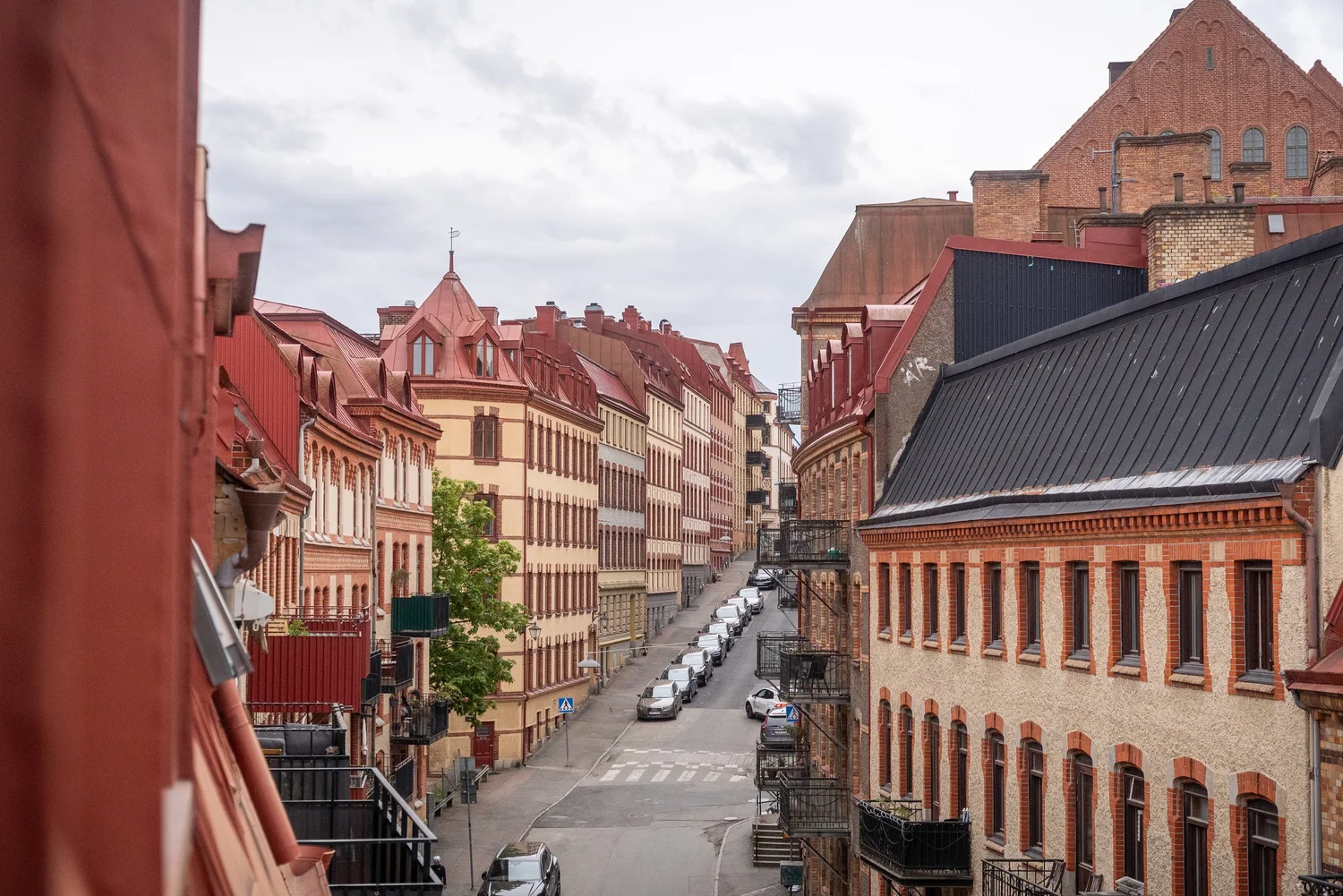
You're moving to Gothenburg with the car you brought from home. You've landed a flat in Vasastan or Linnéstaden through a Hemnet listing that doesn't mention "garage" or "parkering" anywhere, which is normal in the lovely old Stenstaden neighbourhoods. On moving day you pull up outside the building, park in the nearest free space and start carrying boxes. Three hours later there's a yellow and white slip under your windscreen wiper: 800 kronor. Next day, same again, only this time it's 1,200 kronor. And your friendly Swedish neighbour explains by the lift that what you actually need is boendeparkering.
Welcome to one of the sneakiest drains on your wallet and your nerves in everyday Gothenburg life. In large parts of the city centre, boendeparkering, resident parking, is the only way to leave your car legally for more than an hour without the parkeringsvakter (parking wardens) pouncing. If you don't know how the system works, you'll pay more in parking fines in your first few weeks than the resident permit would cost for half a year.
This article shows you how the system is set up, which neighbourhoods are affected, what you need to apply for, what it costs and how long you can realistically expect to wait in each part of town.
What boendeparkering actually is
Boendeparkering is a resident parking scheme run by Göteborgs Stad, the City of Gothenburg, or more precisely by Parkering Göteborg, a municipal company that sells and enforces parking in Gothenburg. It works differently from the resident parking permits you may know from other cities. Germany is a good example: you might know the Bewohnerparkausweis from Berlin-Mitte or Munich's Glockenbachviertel.
In Germany you pay a low fee once a year (often 20–30 EUR), get a sticker for your windscreen and then park for free in your neighbourhood. In Gothenburg, boendeparkering is a paid monthly or annual subscription that gives you the right to park at a much lower rate than the normal tariff, but not for free. The difference sounds small, but it adds up to 10,000 to 17,000 SEK a year, roughly 850 to 1,500 EUR.
It's important to understand that boendeparkering doesn't reserve you a fixed space. You don't get a number or a white line on the tarmac. All you get is the right to park your car in a particular zone at a reduced rate, if you can find a free space.
The zones, and where they affect you
Gothenburg is divided into several boendeparkering zones. The zones that matter for newcomers are almost all inside the Vallgraven (the old city moat) or directly west of it, in other words exactly in the neighbourhoods that Hemnet listings like to sell as "centralt" or "med charm".
The main residential zones are roughly:
Zentrum/Östra Vallgraven covers Inom Vallgraven, Lorensberg, Vasastaden, Heden and Stampen. These are the most expensive and most tightly enforced areas. Spaces are scarce, waiting lists long.
Linnéstaden/Olivedal covers Linnéstaden, Olivedal, Annedal and Kommendantsängen. Popular with young families and with newcomers looking for café-and-bistro neighbourhood life. Waiting times are usually 2–6 months.
Majorna/Kungsladugård covers Majorna, Kungsladugård and Sandarna. A bit more relaxed, but demand has been growing for years because the area is family-friendly. Waiting time often 1–4 months.
Haga/Pustervik is tightly limited because the area is small. If you live here, expect a longer wait, often more than 3 months.
Hisingen-Lindholmen is the only zone close to the centre where you'll usually get boendeparkering straight away, one of the few areas where the system isn't yet overloaded.
In the outer districts such as Frölunda, Tynnered, Kålltorp or Lunden you usually don't need boendeparkering, because there's no managed resident parking area there. Street parking is mostly free or regulated with low daily rates. That's one of the less obvious reasons why these neighbourhoods are more relaxed for drivers than the centre, even if the tram takes longer.
You'll find the official interactive zone map at parkeringgoteborg.se. Type in your address and you'll see immediately which zone applies to you and where its boundaries run.
What it costs
Prices vary by zone and are adjusted every year, but as a rough guide for 2026:
- Inner-city zones (Vasastan, Lorensberg, Inom Vallgraven): about 1,300 to 1,500 SEK per month.
- Middle zones (Linnéstaden, Majorna, Olivedal): around 1,000 to 1,200 SEK per month.
- Outer zones (Hisingen-Lindholmen, Sandarna outside Majorna): about 825 to 950 SEK per month.
There's no annual subscription in the classic sense, but if you keep paying a monthly contract, you'll end up at around 10,000 to 17,000 SEK a year, depending on the zone. Without boendeparkering you park at the hourly rate, which is between 18 and 32 SEK per hour. So if you parked legally for just 4–5 hours a day, you'd already be paying more than the resident permit costs.
One important difference from the German-style annual sticker: the fee is charged monthly, not once a year. For that you need a Swedish bank account with a direct debit mandate (autogiro). Without BankID and autogiro the application gets considerably more awkward. Paying monthly by card through the Parkering Göteborg app is possible, but less convenient.
How the application works
You apply for boendeparkering online with Parkering Göteborg at parkeringgoteborg.se. You'll need:
A personnummer or samordningsnummer. Without one of the two numbers, no application, full stop. This is the most common stumbling block for newcomers who arrive with a car and need to park from day one. If you don't have a personnummer yet, you park at the normal rate for the first few weeks or switch to a multi-storey car park subscription (for example P-Skånegatan, Heden, Lorensberg P-hus).
A folkbokföring address in the zone. You must be registered with Skatteverket at an address inside the relevant boendeparkering zone. A c/o address at a friend's place or a sub-sub-sublet usually won't do, because Parkering Göteborg checks against the population register.
The vehicle registered in Sweden in your name. Foreign plates (German ones, in my case) are tolerated for the first six months after you register in Sweden. After that you have to re-register the car with Transportstyrelsen (the Swedish Transport Agency) and switch to Swedish plates. Until then you can still apply for boendeparkering in most zones, but you have to submit the foreign registration number, the roadworthiness sticker (for a German car, the TÜV sticker) and proof of the vehicle identification number. After re-registration, everything runs automatically through the Swedish registration number.
BankID. Pretty much essential for the online application. If you don't have BankID yet, you can hand in the application at Parkering Göteborg's service office on Pumpgatan. That takes considerably longer, about 3–6 weeks instead of 1–2 days online.
If all the details are correct, the application goes through within 24 to 72 hours. You get a digital confirmation, your registration number is stored in the system, and when the parking wardens scan your plate they can see you're authorised.
Waiting lists: when do they come into play?
This is where it gets interesting. Boendeparkering is capped per zone: there's only a limited number of boendeparkering places in each zone, and once capacity is full, you go on a waiting list.
Current waiting times (as of spring 2026, no guarantee, they fluctuate a lot):
- Vasastan, Lorensberg, Inom Vallgraven: typically 4–9 months
- Linnéstaden, Olivedal: 2–6 months
- Majorna, Kungsladugård: 1–4 months
- Haga, Pustervik: 3–7 months
- Hisingen-Lindholmen: usually immediate
- Hisingen-Eriksberg: 0–2 months
In practice, if you move to Vasastan, you'll realistically be parking at the regular rate of 18–32 SEK an hour for half a year before boendeparkering even kicks in, which, with a normal working routine, quickly adds up to 4,000–6,000 SEK a month.
What happens when you move between zones
If you move within Gothenburg, say from Linnéstaden to Majorna, you have to apply for boendeparkering again. The old one lapses when your folkbokföring address changes. You can't "take it with you". And you start again from zero on the new zone's waiting list, if there is one.
One exception: if two neighbouring zones share a waiting list (such as Linnéstaden/Olivedal), Parkering Göteborg may sometimes credit your waiting time. I wouldn't rely on it.
The three most common mistakes newcomers make
One: assuming the first few weeks will "somehow" work with short hourly tickets. In most zones hourly parking is only allowed Monday to Friday during the day. Leave the car over the weekend or overnight and you're guaranteed a ticket. The parking wardens walk their routes consistently, and the photographic evidence holds up in court.
Two: parking in the wrong place on street-cleaning day. Every boendeparkering zone has a cleaning day once a week with a parking ban, usually in the morning between 8:00 and 14:00. The signs are small, the date is often in Swedish and valid three weeks in advance. Miss the cleaning slot and you pay an 800 SEK fine. Boendeparkering doesn't protect you from that. You'll find out which weekday applies in the Parkering Göteborg app, where you can also set up push notifications the evening before, the only practical protection.
Three: assuming a resident parking permit from home on your dashboard will help (a German Bewohnerparkausweis, for instance). It won't. Boendeparkering in Sweden is entirely digital, based on number plate recognition. A foreign resident sticker is ignored, however official it looks.
What if you could do without a car?
An honest question to finish, because after three months of boendeparkering frustration many newcomers ask it anyway: do you really need your car in Gothenburg?
In Vasastan, Linnéstaden or Majorna you can get practically anywhere in 20 minutes by tram, bus and bike. For a big shop, Mathem or Hemköp will deliver. Weekend trips to Bohuslän or Marstrand work easily with car sharing, at around 400–600 SEK a day including fuel and insurance. Four weekend trips a month comes to 2,000 SEK. Boendeparkering plus insurance plus fuel plus annual servicing adds up to 2,500–4,000 SEK a month.
This isn't meant as an ideological anti-car sermon. For families with small children, regular dog walks in Änggårdsbergen or a summer house on Tjörn, your own car makes sense. But if you're single, a young couple or a commuter moving to Gothenburg and wondering whether to bring your car from home, the honest question is worth asking: do I need it, or am I just dragging along an expensive piece of resident-parking bureaucracy?
In short: what to do this week
If you're moving to Gothenburg with a car in the coming weeks or months:
- Check on parkeringgoteborg.se which zone your future address is in.
- Note down the zone's current waiting time.
- Budget for the first 3–9 months when you'll have to park at the normal rate. Reckon on 3,000–6,000 SEK a month.
- Apply for boendeparkering on the day you get your personnummer, not a day later.
- Check whether a car park subscription (P-Skånegatan or Heden P-hus, about 2,500–3,500 SEK/month) is cheaper than the hourly rate for the transition period.
Boendeparkering isn't complicated. It's just a system that has no real equivalent in many other countries, Germany included, and that's why it reliably costs money in the first few weeks if you don't know it. If you understand it in advance, you can park in peace. If you ignore it, you're funding the City of Gothenburg.
Read more on Nordabenteuer:
- Finding a flat in Gothenburg as a newcomer: what really works
- The best neighbourhoods in Gothenburg: where do newcomers live?
Buying a house in Sweden: practical guide, the in-depth guide to this topic (currently available in German): view it in the shop.
I'm Sebastian Schiefner, a photographer in Gothenburg, and I help people who are moving to West Sweden with finding a home and buying property. Book a free intro call.
