Egen brunn and enskilt avlopp: private well and septic system when buying in Sweden
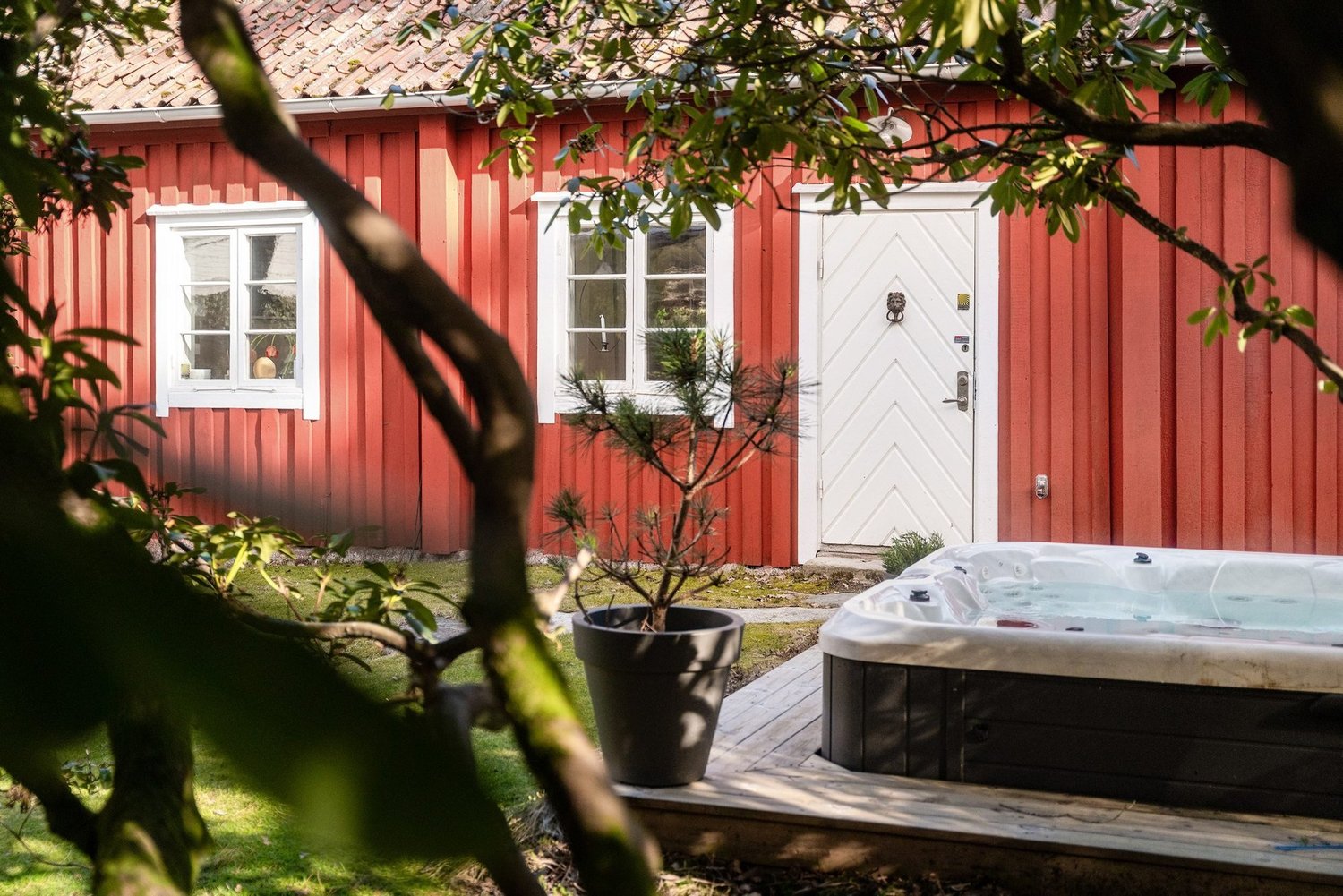
You're standing on a plot in Bohuslän, the water glitters behind the pines, the estate agent is smiling, and somewhere between "dream location" and "we have to have it", almost every buyer from abroad forgets to ask the same question: where does the water actually come from, and where does the waste water go?
In the city that's never an issue. You turn on the tap, you flush, done. In the Swedish countryside it's one of the most expensive questions you can ask when buying a house. Over a million Swedish homes are not connected to the municipal network. They have an egen brunn (private well) and an enskilt avlopp (private sewage system). That's especially true of the stugor in Bohuslän, Dalsland and Småland, in other words exactly the properties that attract buyers from abroad the most.
And that's exactly where the trap lies. A well that doesn't work or an outdated septic system won't show up in the Hemnet listing. The asking price says nothing about it. But the follow-on costs can run to six figures, in Swedish kronor, sometimes in euros.
The well and the septic system are also an insurance issue: water damage is the most expensive type of claim in Swedish private households, and what's covered on your plot isn't automatically in the policy. See Villaförsäkring: what it covers and what it doesn't.
Why this works differently in Sweden
In many countries, Germany for example, public water and sewage connections are standard in almost every inhabited corner. Even a remote holiday home is usually connected to the network. In Sweden the country is simply too large and too sparsely populated for that to be worthwhile everywhere. The result: if you move to the countryside or buy a stuga, you usually take over private infrastructure, and with it full responsibility for it.
There's also a legal point many newcomers underestimate: in Sweden the buyer bears the undersökningsplikt, the duty to carry out their own thorough inspection. And water is explicitly not part of a normal house inspection (besiktning). The besiktningsman (inspector) checks the building fabric, roof, damp and crawl space (krypgrund), but not whether your drinking water is clean or whether the septic system meets the municipal requirements. You have to arrange that yourself. If you don't, and later find a problem, you'll almost never have any recourse against the seller.
Part 1: The egen brunn, your own drinking water
There are two types of well: the grävd brunn (a dug, shallow well) and the borrad brunn (a drilled, deep well). Dug wells are more prone to contamination and to running dry in summer; drilled wells are deeper and more stable, but draw their water from the bedrock, and that brings its own problems.
Before you bid on a property with its own well, have a water test (vattenprov) done. That isn't a luxury, it's the cheapest insurance you can take out when buying a house. A simple analysis of the most important values costs around 600 SEK; a comprehensive safety package including heavy metals and radon is about 2,000 to 2,700 SEK. Have an accredited laboratory (Eurofins, SGS or similar) check at least these three areas:
Microbiology: coliform bacteria and E. coli. These reveal whether surface water or sewage is seeping into the well.
Chemistry: nitrate and nitrite (a sign of farming), pH, hardness, iron, manganese.
Geology: radon, uranium and arsenic. This is the point newcomers almost always overlook: in some regions Swedish bedrock contains a lot of radon and uranium, and both end up in the water of drilled wells without you being able to taste or see them.
If you find problems, that doesn't automatically mean "hands off". It means: do the maths. A UV system against bacteria costs 10,000 to 30,000 SEK, a carbon filter against chemical contamination 15,000 to 50,000 SEK, a reverse osmosis system against metals and nitrate 20,000 to 60,000 SEK. A complete treatment system can cost 50,000 to 150,000 SEK. And if the well can't be saved at all? A new drilled well costs 50,000 to 150,000 SEK depending on depth and rock, with no guarantee at all that you'll find enough water at the depth you want.
If you're planning the whole move and not just the well: my authorities roadmap for the first month puts Skatteverket, the personnummer and your bank account in the order in which they actually work.
Free
Looking at summer houses in Sweden?
Book a free 15-minute call with me and bring your questions about moving and buying, from the personnummer to the house purchase.
Part 2: The enskilt avlopp, your own sewage treatment
This is where it gets really serious, because waste water isn't just a technical question but a legal one. A private sewage system in Sweden needs a permit from the municipality, and the requirements have become considerably stricter over the years. Sweden is estimated to have hundreds of thousands of old, non-compliant systems, and the municipal environmental offices (kommunens miljökontor) are increasingly writing to owners and demanding upgrades.
The most important thing first: the permit belongs to the system, not automatically to the new owner, but you take over the obligation to upgrade when you buy. If two years from now the municipality issues a föreläggande (an order to replace it) for the old system, you're the one who pays.
There are different types of solution:
Infiltration: after mechanical pre-treatment, the waste water seeps into the ground. 80,000 to 150,000 SEK.
Markbädd (sand filter bed): where the soil isn't suitable for pure infiltration. 100,000 to 180,000 SEK.
Minireningsverk (small treatment plant): a compact technical system, often required in sensitive areas. 100,000 to 200,000 SEK.
Sluten tank (closed holding tank): usually only for toilet waste water, has to be emptied regularly.
A complete new system for a normal single-family house realistically comes to 100,000 to 160,000 SEK, all included. And there's no real ceiling: in difficult terrain or with strict requirements, over 300,000 SEK is possible.
The second critical point is the skyddsnivå (protection level) your municipality sets. At normal skyddsnivå, reducing organic matter and phosphorus is enough. If your plot is close to a lake, the coast or in a water protection area, and that's exactly the case for many Bohuslän stugor, hög skyddsnivå (high protection level) applies, and then you also have to reduce nitrogen. That makes the system noticeably more expensive and rules out some cheaper solutions from the outset.
Building your own system or "substantially altering" an existing one is only allowed with a permit from the environmental office, applied for before work starts. Depending on the municipality, the application costs 5,000 to 15,000 SEK and typically takes four to twelve weeks to process. If you build without a permit, you risk a fine and, in the worst case, an order to remove the system.
The three questions to ask before every bid
Before you enter a bidding process (budgivning), clarify exactly these three things, ideally in writing with the estate agent:
How old is the enskilt avlopp, and is there a valid permit? Ask to see the municipality's tillstånd (permit). Systems from the 1990s or older are a warning sign.
Is there a recent water test, and if not, may I have one done before buying? A reputable seller won't have a problem with that.
Does normal or hög skyddsnivå apply to the plot? A call to the municipality's miljökontor clears that up in five minutes and can make a difference of thousands of kronor.
Build the worst case into your bid. A stuga that looks 200,000 SEK cheaper isn't a bargain if the well and septic system together need 250,000 SEK of upgrades. This is exactly the point where a local eye saves money, and the reason I do this check on every waterfront property before the price is even discussed.
What to remember
When you buy a stuga in Sweden, water and sewage aren't a detail but a cost block of their own that nobody checks for you. The well can be clean today and fail tomorrow; the septic system can pass muster today and land you an expensive föreläggande in two years. That's no reason to stop dreaming of country life. The Swedish summer house is one of this country's loveliest promises. It's just a reason to ask the right three questions before you bid, instead of the wrong one ("When can we sign?").
Buying a house in Sweden: practical guide, the in-depth guide to this topic (currently available in German): view it in the shop.
I'm Sebastian Schiefner, a photographer in Gothenburg, and I help people who are moving to West Sweden with finding a home and buying property. Book a free intro call.
