Lantställe: buying a summer house in Sweden in 2026
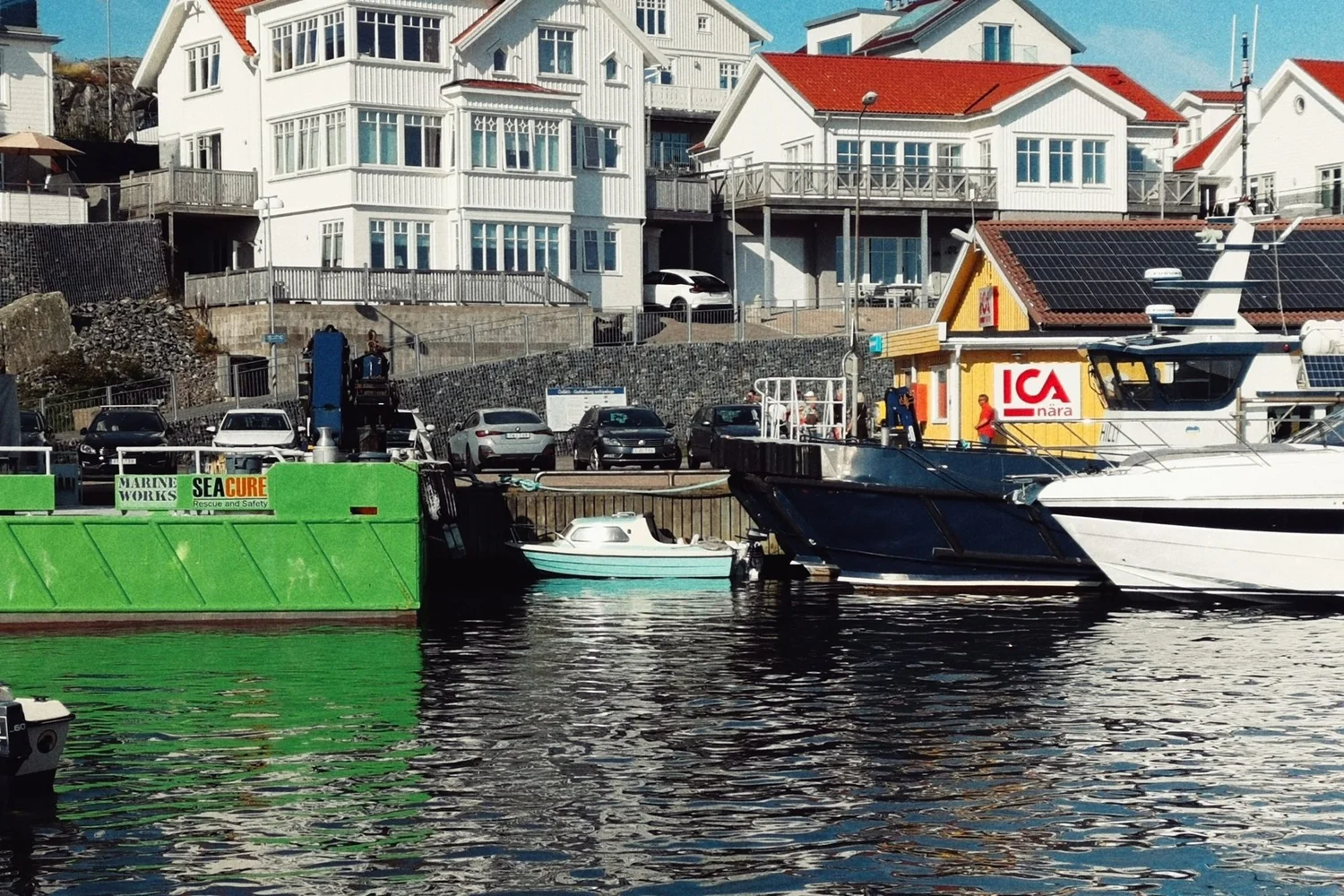
When you first drive north from Gothenburg in May, you'll notice something you may not know from home: every few hundred metres, a red wooden house with white corners sits in the landscape. Sometimes right by the water, sometimes in the middle of the forest, sometimes in a meadow with no neighbour in sight.
That's no coincidence. It's a lantställe, a country house, and Sweden has more than 600,000 of them.
A great many Swedish families own one or have regular access to one. For buyers from abroad entering the market in 2026, that's the single most important piece of background information. Because here, a lantställe isn't a luxury item. It's part of how people plan their lives, and that shapes every price, every season, every negotiation.
The same applies to a lantställe as to a house on the coast: in the standard terms, storm cover only kicks in from 21 m/s, and outbuildings by the water are often excluded. My article on villaförsäkring goes through the terms in detail.
Why the tradition still shapes the market today
The summer house tradition in Sweden is more than 150 years old. It began in the 19th century with the urban middle class, who wanted to escape industrialisation in the summer. In the 20th century it was democratised, through Swedish rent-to-own legislation, cheap building land in the 60s and 70s, and a cultural assumption that still holds today: if you can afford it, you have a lantställe.
This has two practical consequences for you as a buyer:
First: the summer house market isn't driven by speculation. Most lantställen are passed down within families, not sold on. When a property does come onto the market, it's often because of a change of generation or an inheritance, and the seller is rarely under financial pressure.
Second: the peak season is very short. The sales cycle starts in mid-April, peaks between mid-May and mid-June, and drops off noticeably after midsommar. If you buy in February, you buy with a cool head. If you buy in June, you pay for the summer feeling too.
The key regions compared
Not every lantställe is the same. For buyers with capital from abroad, four regions are particularly interesting in 2026, for different reasons.
Bohuslän (north of Gothenburg, up to the Norwegian border) The most expensive region in the country. Granite skerries, salt water, a short distance from Gothenburg and Oslo. Expect between 3 and 15 million SEK for a classic archipelago house with a sea view. In the hinterland, 10 to 20 kilometres from the coast, the price quickly drops to 1.5 to 4 million SEK for a comparable property.
Dalsland (between Vänern and the Norwegian border) The underrated region. Dense forests, lots of lakes, no salt water. Prices between 800,000 and 2.5 million SEK. If you're looking for rural peace and quiet rather than a showcase in the skerries, you'll get considerably more house for your money here.
Småland (southern Sweden) The region for family lantställen. Classic red wooden houses, lots of lakes, easy to reach by car and ferry from Hamburg, for example. Prices between 500,000 and 2 million SEK. Popular with German buyers, because the journey with a family is manageable.
Halland (south of Gothenburg, towards the Danish border) Sandy beaches instead of granite, a milder climate, shorter winter months. Prices between 2 and 8 million SEK on the coast. Less iconic than Bohuslän, but more practical for year-round use.
The additional costs newcomers regularly underestimate
The purchase price is only half the story. With a lantställe in Sweden, there are extra costs that may be split differently in your home country, or not exist there at all.
Stämpelskatt: 1.5% to the Swedish state, the property transfer tax, calculated on whichever is higher, the purchase price or the taxeringsvärde (assessed tax value). Plus 825 SEK for registering ownership in the land register (lagfart) and 375 SEK per pantbrev.
Pantbrev: if you take out a mortgage, you need mortgage deeds for the bank. 2% of the amount secured, one-off. On a 3 million loan: 60,000 SEK.
Kontantinsats: since April 2026, the bolånetak (mortgage cap) has been 90 per cent, so you need at least 10 per cent of your own money as a deposit. For holiday homes and foreign buyers, banks in practice often require 30 to 50 per cent. If you don't have a personnummer, plan for the higher share.
Driftskostnader: electricity, water, the chimney sweep, waste collection, insurance, internet. For a medium-sized lantställe, expect 15,000 to 30,000 SEK a year, even if you're only there for six weeks.
Vägförening: many lantställen are on private roads. The road association sends a bill once a year for snow clearing, gravel and grading. Between 2,000 and 8,000 SEK depending on the region.
Add all this up, and for a 3 million SEK house you'll quickly arrive at annual running costs of 40,000 to 60,000 SEK. That's often the uncomfortable number when you do the sums.
Why April is the right moment to start looking seriously
It sounds like marketing, but it's market reality: if you look in April and the first half of May, you have a genuine advantage. Three reasons:
The first properties of the year are coming online now: sellers who did the photos with their estate agent over the winter and want to get onto the market deliberately ahead of summer demand. These houses are often the well-thought-out sales, not the impulse sales of summer.
You see the property before the season. Bohuslän in May is cool, sometimes grey, with the wind coming straight off the sea. If you like a house now, you'll like it in November too. That's a more realistic test than a sunny July viewing day.
The bidding rounds, budgivning in Swedish, are considerably shorter and more disciplined in spring than in high summer. Serious buyers meet serious sellers. In July, the summer browsers join in, and individual properties end up in a hectic bidding round well above the utgångspris (starting price). That's my observation, not the norm: according to Hemnet, the national average premium is around one per cent.
What you need before you look at your first property
An honest list, because I get this question every day.
First: a clear budget, including all additional costs. Not "I could imagine 3 million", but "I can spend 3.5 million, of which 600,000 for my deposit, taxes and initial renovation".
Second: a mortgage approval in principle. In Sweden it's called a lånelöfte. A Swedish bank checks your documents and gives you a conditional commitment for a specific amount. Without a lånelöfte, you aren't a serious bidder. If you go to Handelsbanken or SEB, allow 2 to 4 weeks for the assessment.
Third: an honest answer to the question of use. Will you be there six weeks a year, or is it a second home occupied for 100 days? That determines which region and which kind of house fits. A classic Bohuslän archipelago house without a heating system works for six weeks of summer. For visits in October, you need something else.
Fourth: someone on the ground who will talk to you honestly. An estate agent sells. A building inspector (besiktningsman) inspects. I know the region as a photographer and see things others don't. Don't let online pictures seduce you from a distance: almost every Sweden magazine photo was taken in June at six in the morning.
The emotional truth behind the lantställe
Swedes don't buy a summer house to speculate. They buy a summer house to have a place that doesn't change. Where the children climb the same tree trunk in July that their parents climbed in 1985. Where the morning stillness by the water still works, even if the rest of life has got louder.
If you come into this market with an investor's eye, looking for yield, appreciation, a capital investment, you'll rarely be happy. The houses sold purely as investments are often the ones with the most compromises. The good lantställen are bought with the mindset that this could be the last house of your life.
That makes the Swedish summer house market strangely honest. And for buyers who bring that honesty with them, 2026, with the weaker krona, is a realistic year to have a look around.
If you're seriously thinking about a lantställe and don't want to go through the process alone, write to me. I know the region, the estate agents, the inspectors. And I'll tell you honestly whether the property you like really fits your life.
More on this topic: Buying a summer house in Bohuslän: what does a house on the west coast cost? (read the article) Buying in Sweden in spring: why April and May are the best time for scouting (read the article)
Buying a house in Sweden: practical guide, the in-depth guide on this topic (currently available in German): view it in the shop.
I'm Sebastian Schiefner, a photographer in Gothenburg, and I help people who are moving to West Sweden with finding a home and buying property. Free intro call.
