Your first Swedish winter: darkness in Gothenburg
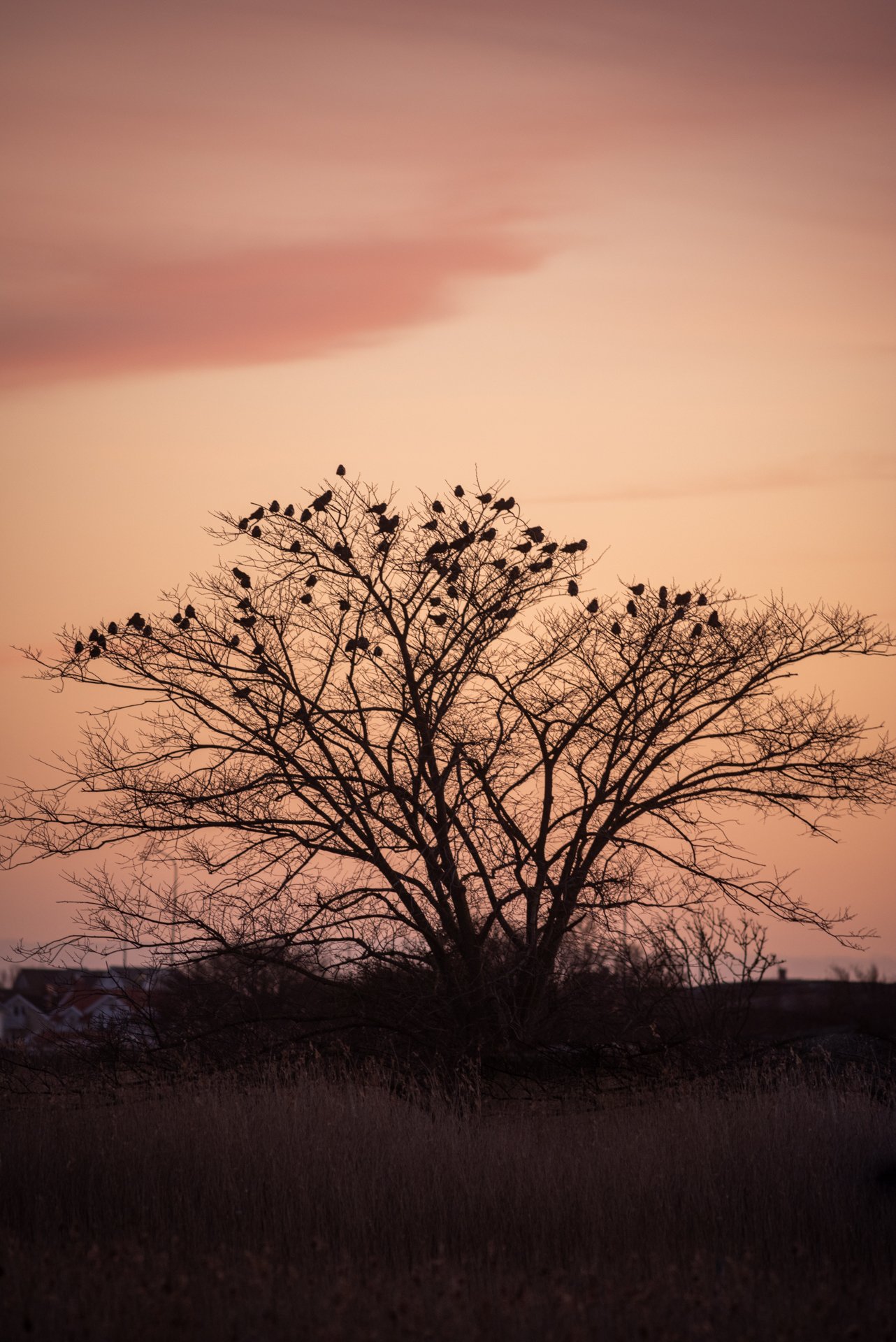
You won't forget your first Swedish summer. Light evenings, the skerries, midsommar, the feeling of having arrived in a country that simply doesn't go to sleep from June to August. And then November comes.
Before the move, many people ask: "How cold does it get?" The better question would be: "How dark does it get?" Because in Gothenburg, in my experience, the issue isn't the cold, it's the light. More precisely: how little of it there is. Here are the numbers, the cultural answers Swedes have found to it, and what you can do in very practical terms so that your first winter doesn't turn into an endurance test.
How dark it really gets in Gothenburg
On 1 November 2026, the sun rises in Gothenburg at 07:24 and sets at 16:25, which is almost exactly nine hours of daylight. Sounds harmless enough. In Hamburg, to take a German city further south for comparison, it's 9 hours and 28 minutes on the same day, so at first the difference is smaller than many people think.
Then things move fast. At the winter solstice on 21 December 2026, the sun is in the sky over Gothenburg from 08:54 to 15:26. That's 6 hours and 32 minutes. For comparison, on the same day:
- Hamburg: 08:34 to 16:01, 7 hours 28 minutes
- Munich: 08:01 to 16:22, 8 hours 21 minutes
So Gothenburg has almost an hour less daylight than Hamburg and almost two hours less than Munich. And the hours you do have feel different: even at midday on the shortest day, the sun is only 9 degrees above the horizon. It barely makes it over the rooftops.
There's a small consolation in the twilight. Civil twilight, the phase in which it's still light enough to see outside without street lamps, runs from 08:02 to 16:17 on 21 December. So it isn't pitch-black at half past three; that comes at around quarter past four. On grey, rainy days, though, and in my experience the Gothenburg winter has more of those than snowy ones, it feels considerably shorter.
The drop at the end of October: the clocks go back
The first real jolt comes not in December but on a Sunday at the end of October. On 25 October 2026, summer time ends and the clocks go back one hour at 03:00. Sweden changes its clocks on the same day as Germany.
You can see the result in the calendar: on Saturday 24 October, the sun sets in Gothenburg at 17:45. The following day, Sunday, at 16:42. From one day to the next, you come home from a normal working day at dusk. For many people, that's the moment winter starts, at least emotionally, even if the trees outside still have their leaves.
My advice: plan the weeks around the clock change deliberately. Meet up with people at weekends during the day, not in the evening. A walk in your lunch break instead of after work. It sounds trivial, but it makes a noticeable difference.
And up north? Kiruna for comparison
When you tell friends back home about the Swedish winter, most of them think of polar night. It exists, but not in Gothenburg. In Kiruna, right up in Lapland, the sun is still above the horizon for 32 minutes on 10 December 2026. From 11 December 2026 to 1 January 2027 it doesn't rise there at all: a good three weeks. It reappears on 2 January, for 37 minutes.
That puts things in perspective. Gothenburg is in the south of the country, on the west coast, and even on the shortest day it has more than six and a half hours of sun above the horizon. So if someone tells you that in Sweden it's "dark all day" in winter, that's true for the far north, not for Gothenburg.
How Sweden brings the light back: Advent and Lucia
Swedes have a pretty clear cultural answer to the darkness: light in every window.
By Advent at the latest, from what I've seen, a great many windows in Gothenburg have a glowing star hanging in them or an electric candle bridge standing in them. And here's a nice twist, especially if you come from Germany: the adventsstjärna (Advent star) originally comes from Herrnhut in Saxony, where according to Nordiska museet it was created in the 1880s. In Sweden it spread, together with the Advent candlestick, in the 1930s. The electric adventsljusstake with its seven lights in an arch goes back to Oskar Andersson, who worked at Philips and came up with the idea in 1934. The first ones went on sale in 1939.
So when you walk through Majorna or Linnéstaden in December and see an arch of lights in window after window, it isn't decoration in the usual sense. It's a kind of quiet counterweight to the darkness. Join in. A candle bridge in the window is also a small signal to the neighbours: someone lives here who has settled in.
The second anchor is Lucia on 13 December. In schools, preschools, churches and workplaces, groups in white, floor-length robes walk in carrying candles and singing, with Lucia herself wearing a crown of lights on her head, accompanied by star boys in paper hats carrying stars on sticks. Then there are gingerbread biscuits and lussekatter, the saffron buns. According to sweden.se, Lucia night was considered the longest night of the year in the old calendar. If you have children, you're guaranteed to experience Lucia through förskola (preschool) or school; you'll find more on family life here in my article on moving to Gothenburg with children.
Reflectors and bike lights: staying visible
Something many newcomers notice: from what I've seen, adults here wear reflectors as a matter of course too. Small tags on their jackets, reflective bands on their arms, hi-vis vests when jogging.
For pedestrians, it isn't required by law. NTF, the Swedish road safety organisation, puts it as a recommendation: anyone walking in the dark "bör" (should) wear reflectors or a light. The reasoning is striking: according to NTF, a driver with dipped headlights only sees you at 20 to 30 metres if you're wearing dark clothing, at 60 metres in light clothing, and at 125 metres with a reflector. A reflector tag costs very little. Buy a few and hang one on every winter jacket.
For cyclists, on the other hand, there are clear rules. According to Transportstyrelsen (the Swedish Transport Agency), a bike in the dark needs a lamp at the front with white or yellow light and one at the back with red light, each clearly visible at 300 metres. Plus reflectors: red at the back, white at the front, white or orange-yellow on the sides. If you cycle a lot in Gothenburg or use Styr & Ställ, it's worth a quick check of your lights before October is out.
Building your day around the light
The most important trick for the Gothenburg winter is, in my experience, a simple one: use the light when it's there. And that's at midday. On the shortest day, the sun is at its highest here at 12:10. If you spend your lunch break outside, you get the brightest part of the day. If you spend it at your desk, you might not see the sun at all during the week.
For the evenings, the city has a very Swedish solution: elljusspår, illuminated running trails. Göteborgs Stad (the City of Gothenburg) runs them in places like the Delsjön nature reserve (2.5, 5 and 8 kilometres), Hisingsparken (2.8 and 5.4 kilometres), Vättlefjäll and Ruddalen. According to the city, the lights are on from 05:30 until it gets light, and in the evening from dusk until 22:00. Whether you run, walk briskly or just stroll doesn't matter. What matters is being outside. How deeply being outdoors is rooted in Swedish culture is something I've written about in my article on friluftsliv.
And then there's indoors. Candles, fika with colleagues, dinner at friends' places: the Swedish winter is social, just quieter than the summer. In my experience it's worth setting up one or two fixed commitments a week in the autumn: a course, a choir, a sports club. Not to keep yourself busy, but because a lot of life here in winter runs on fixed routines, and spontaneous get-togethers become rarer.
If your mood stays low for weeks, take it seriously and contact 1177 or your vårdcentral (local health centre); how the system works is explained in my article Emergencies in Gothenburg: 1177 and Akuten.
Winter light through a photographer's eyes
As a photographer, I see the winter here with mixed feelings, but above all with enthusiasm. When the sun is only 9 degrees above the horizon around midday, it's never harsh and never overhead. All day long you have the light you have to wait for until late evening in summer: low, warm, with long shadows. On clear days, the façades in Haga or the cranes at the harbour glow as if someone had lit them.
And then there's the blue hour. On 21 December it falls between sunset at 15:26 and the end of civil twilight at 16:17. So you can photograph it on your way home, without an alarm clock and without an evening appointment. Wet streets, lit windows, the tram in blue: in my experience, Gothenburg is at its most beautiful in that hour.
My tip, even if you only shoot with your phone: make the winter a project. One picture every lunch break, one in the blue hour. You start paying attention to the light instead of the darkness. That changes how the months feel.
From 21 December, things look up
The best thing about the Swedish winter is that you know exactly when it turns. In 2026, the winter solstice falls on 21 December, at 21:50. After that it gets lighter again, imperceptibly at first, then remarkably quickly.
On 31 December, Gothenburg has 6 hours 39 minutes of daylight, gaining just over a minute a day at that point. By the end of January it's already more than four minutes a day: on 31 January 2027, the sun is in the sky from 08:17 to 16:34, which is 8 hours 18 minutes, around an hour and three-quarters more than at the solstice. In my experience, you'll notice it on your way home by February at the latest.
And when winter really is over, the whole of Sweden celebrates together. What that looks like is something I've described in my article on Valborg.
If you're planning your move to Gothenburg and want to know how to plan your first year realistically, winter included: in a consultation, we'll talk through your specific situation.
