Loppis in Sweden: furnishing your home on a budget in 2026
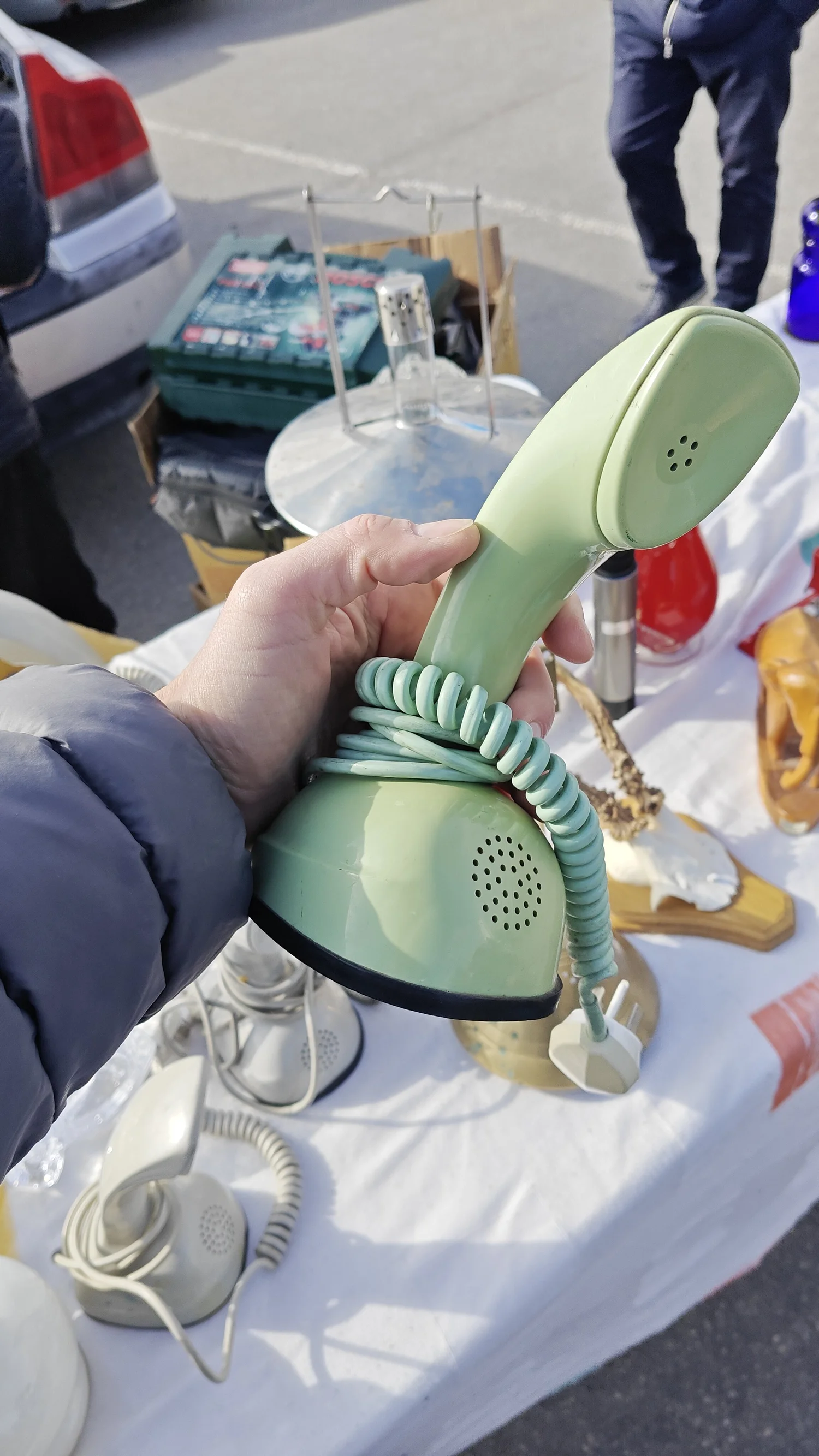
If you've just arrived in Sweden and you're looking at the IKEA bill wondering whether there really is no other way, the short answer is: there is. Sweden has one of the strongest second-hand cultures in Europe, and from mid-May the most important season of the year gets going. Loppis weekends, bygdegård auctions, Auktionsverket in Gothenburg, Blocket and Tradera together form a network that lets you furnish an entire flat for 5,000 to 15,000 SEK instead of spending 40,000 at IKEA. Provided you know where to look.
I moved to Gothenburg in 2022, and in the first three months I bought second-hand everything that hadn't come in the removal van from Germany. Desk, dining table, sofa, lamps, crockery, tools. What I learned about the Swedish system along the way is hard to find in any language other than Swedish, so here's an honest overview.
Why the loppis season starts in May (and peaks in July)
Loppis is the Swedish short form of loppmarknad, flea market. Unlike in Germany, for example, where flea markets run all year round in halls or car parks, most Swedish loppis are outdoors: on private land, in village halls (bygdegårdar), in barns or by the roadside. As soon as the frosty nights are over, it begins.
The first weekends with any real loppis activity are typically around Ascension Day (Kristi himmelsfärdsdag) and from mid-May onwards. High season arrives with Midsommar and runs through to the end of August. In September things quieten down, and in October it's over, until the weather in May once again allows sofas and boxes of books to be set out on the lawn.
What that means in practice: if you move to Gothenburg in June, your timing is perfect. If you land in January, you buy online for the first few months (Blocket, Tradera, Facebook Marketplace) and add to it offline in spring.
The three online platforms you can't do without
Blocket: Sweden's all-purpose marketplace
Blocket.se is the Swedish equivalent of a classifieds site, but with a much more active furniture market. Here you'll find private sellers in your neighbourhood clearing out entire flats, students moving out after graduating, and families getting rid of everything after moving into their own house. In Gothenburg, the most important categories are Hem & Hushåll, Möbler, Inredning and Husgeråd.
Practical tips from my own experience:
- Always filter by neighbourhood, not by the whole city. Moving a sofa through the city centre without a car is stressful. Search your own area first, then widen the radius.
- Look out for "skänkes bort": given away for free if you collect. In Gothenburg there are dozens of posts like this every week, often with surprisingly good pieces, because many Swedes would rather give things away than haggle.
- Reply quickly, but politely. The first three messages usually win. A short sentence ("Hej, är detta fortfarande tillgängligt? Jag kan hämta i morgon eftermiddag", meaning "Hi, is this still available? I can collect tomorrow afternoon") is enough.
- Don't haggle aggressively. Swedish loppis culture is not a bazaar. Offering 10 to 15% less is fine; more comes across as rude.
Tradera: the Swedish answer to eBay
Tradera.com is auction-based and owned by Schibsted (like Blocket). This is where vintage pieces, lamps, crockery, books and tools often end up. Furniture is rarer, because shipping is expensive. But for smaller items it's unbeatable.
The advantage over Blocket: sellers are rated, and payment goes through Tradera's escrow. Safer when you're buying from a distance. The disadvantage: you pay for shipping, which eats up the price advantage on larger items.
Facebook Marketplace and local groups
Facebook Marketplace has become surprisingly active in Sweden, especially in Gothenburg. If you don't have a Facebook account, it's worth getting one. There are also local groups such as "Loppis & Skänkes bort Göteborg", "Begagnat Majorna" and "Fynd & Klipp Hisingen". These groups often move faster than Blocket, because there's less competition and more personal contact. Payment is by Swish (more on that below).
Loppis weekends: where it's actually worth going
In and around Gothenburg, from May onwards there are several open loppis practically every weekend. The best places to go:
- Trädgårdsföreningen: the city park in the centre, with loppis weekends several times a season and 30 to 80 stalls. More curated, good quality, slightly higher prices.
- Bygdegårdar in Bohuslän: village halls from Marstrand to Hunnebostrand, with classic spring and summer loppis. This is where you'll find genuine vintage items from house clearances, because many summer house owners empty their garages after the spring clean.
- Hembygdsgårdar in the countryside: local heritage associations in Lerum, Alingsås and Kungälv. Seasonal loppis in spring, often with coffee and hembakat (home baking) on the side. Relaxed atmosphere, fair prices.
- Strömma Lager: a large indoor market in Mölndal, open all year, but at its fullest in spring.
What you really need on the day: cash in small notes (increasingly just as a backup, because Swish dominates), a tote bag or folding crate, and ideally a car or at least a friend with an estate car. The good pieces go early: be there by 10 at the latest, better by 9.
Auctions: when you mean business
Göteborgs Auktionsverk on Banehagsgatan at Klippan, the city's largest auction house, regularly auctions furniture, art, crockery and design pieces; online bidding runs via Auctionet, and the dates are on the website. Unlike at a loppis, with a bit of luck you can get mid-century pieces here (Bruno Mathsson, Carl Malmsten, Yngve Ekström) that cost many times as much in Germany, for example, sometimes at estimates of 200 to 1,500 SEK.
How it works in practice:
- Preview viewing Monday to Wednesday before the auction. You go along, look at the items and take notes. The online catalogue is available at auktionsverket.se.
- Registration with BankID and a personnummer, so only possible once you're folkbokförd (registered as resident).
- Bidding in the hall, by phone or live online. Online is the easiest if you don't want to go in person.
- Buyer's premium (provision) is added on top of the hammer price, a double-digit percentage. The exact rate and any additional fees are set out in the auction house's köpvillkor (terms of purchase); work it out once before your first bid, or the apparent bargain won't be one.
- Collection within four working days, otherwise you pay a storage fee. You can have bulky items delivered via their transport partner (1,200 to 2,500 SEK in Gothenburg, depending on the floor and whether there's a lift).
There are also private summer auctions in the archipelago (often as a bouppteckningsauktion, an estate auction), which are advertised in the local paper Göteborgs-Posten or on notices at the bygdegårdar. You end up in a barn somewhere between Strömstad and Lysekil, buying a dining table for 400 SEK plus a schnapps with the neighbours.
Swish etiquette: how to pay in Sweden without embarrassing yourself
This is where newcomers regularly come unstuck. In Sweden, cash is practically dead at loppis and in private sales; Swish is the standard. You need:
- A Swedish bank account (see my article on opening a bank account)
- BankID
- The Swish app, linked to your bank
At the loppis, you type in the seller's phone number, enter the amount and confirm with BankID: done in 15 seconds. The confirmation goes straight to the seller's phone, and they nod or hand you the item.
If you don't have Swish yet (typical in the first 6 to 10 weeks after moving), say so openly: "Tyvärr har jag inte Swish än – kan jag betala kontant?" (Unfortunately I don't have Swish yet. Can I pay cash?). Most Swedes are friendly about it, a few aren't. Keep 500 to 1,500 SEK in notes ready for days like that.
What's worth buying, and what isn't
Worth it:
- Crockery (especially Rörstrand, Gustavsberg, IKEA classics): often 80% below the new price
- Tools (Bahco, Hultafors): Swedish brands, durable, dirt cheap at loppis
- Books, records, children's toys
- Lamps, mirrors, frames: a huge selection, a very personal style
- Vintage wooden furniture (teak dining tables, beech chairs from the 60s and 70s): at Auktionsverket or at loppis in the countryside
- Outdoor equipment (camping chairs, tools, bike accessories)
- Children's things (clothes, car seats, toys): children grow out of them faster than they wear them out
Not worth it:
- Mattresses and upholstered furniture with an unknown history: Swedish bostadsrättsföreningar (housing associations) explicitly warn about bedbugs (vägglöss). For your first sofa, you're better off buying new.
- Large appliances (washing machine, dishwasher): the energy consumption of old appliances eats up the savings. Only worth it for models under 5 years old with a receipt.
- Upholstered furniture from smoking households: the smell often won't come out.
- IKEA furniture at more than 30% of the new price: it isn't expensive even when new, and second-hand it often comes with stripped screws and no instructions.
The spring-clean effect: why the first two weekends in May are special
Sweden has a strong cultural attachment to vårstädning, the spring clean. From mid-April to early May, practically every household clears out whatever has survived the winter. Garages, cellars, lofts. Whatever isn't needed any more ends up on Blocket, at the återvinningsstation (recycling station) or at the first loppis of the season.
That means the two weekends after 1 May statistically have the biggest and most varied selection. If you're already fully furnished at that point and don't need anything, you've missed the best window of the year. If you've just arrived and can get going straight away, you'll buy cheaply and well.
A practical order for your first few weeks
This is how I went about it, and it works for most newcomers:
- Weeks 1 to 2: IKEA for the absolute basics (mattress, one chair, one lamp). You need sleep and light, not style.
- Weeks 2 to 4: Comb through Blocket and Tradera, and Facebook Marketplace at the same time. Desk, dining table and bookshelf first.
- Weeks 4 to 8: Off to the loppis. Plan a weekend, organise a car or a friend with an estate car, and do Trädgårdsföreningen plus a trip into the countryside (Lerum or Kungälv).
- From month 3: Visit Auktionsverket in Gothenburg, once just as an observer. The second time, bid.
A realistic budget for a two-room flat furnished entirely second-hand: 5,000 to 8,000 SEK plus IKEA basics. If you buy everything new, you'll end up at 35,000 to 50,000 SEK.
Why this culture runs deeper than just "saving money"
One thing I've noticed after four years in Sweden: loppis and auctions here aren't about having to save money; they're a social practice. You meet neighbours, talk to grandparents about their old furniture, hear the story of the sofa you're buying. Sweden has an almost old-fashioned appreciation for things with a past, and for the idea that things get passed on rather than thrown away.
When you notice that for the first time as a newcomer, you suddenly understand a little more about the Swedish relationship with consumption, lagom and sustainability. That may be the most honest reason to build loppis Sundays into your spring plans: not the money, but what you pick up along the way.
Read more:
- Setting up Swish in Sweden: why the payment app matters more than your bank card
- Opening a bank account in Sweden: the three best ways in 2026
- The best neighbourhoods in Gothenburg for newcomers
Do you have your own loppis experiences from Sweden, or questions about furnishing your home? Write to me at hallo@nordabenteuer.de.
Buying a house in Sweden: practical guide: the in-depth guide to this topic is currently available in German. View it in the shop.
I'm Sebastian Schiefner, a photographer in Gothenburg, and I help people who are moving to West Sweden with finding a home and buying property. Free intro call.
