Living with a dog or cat in Sweden
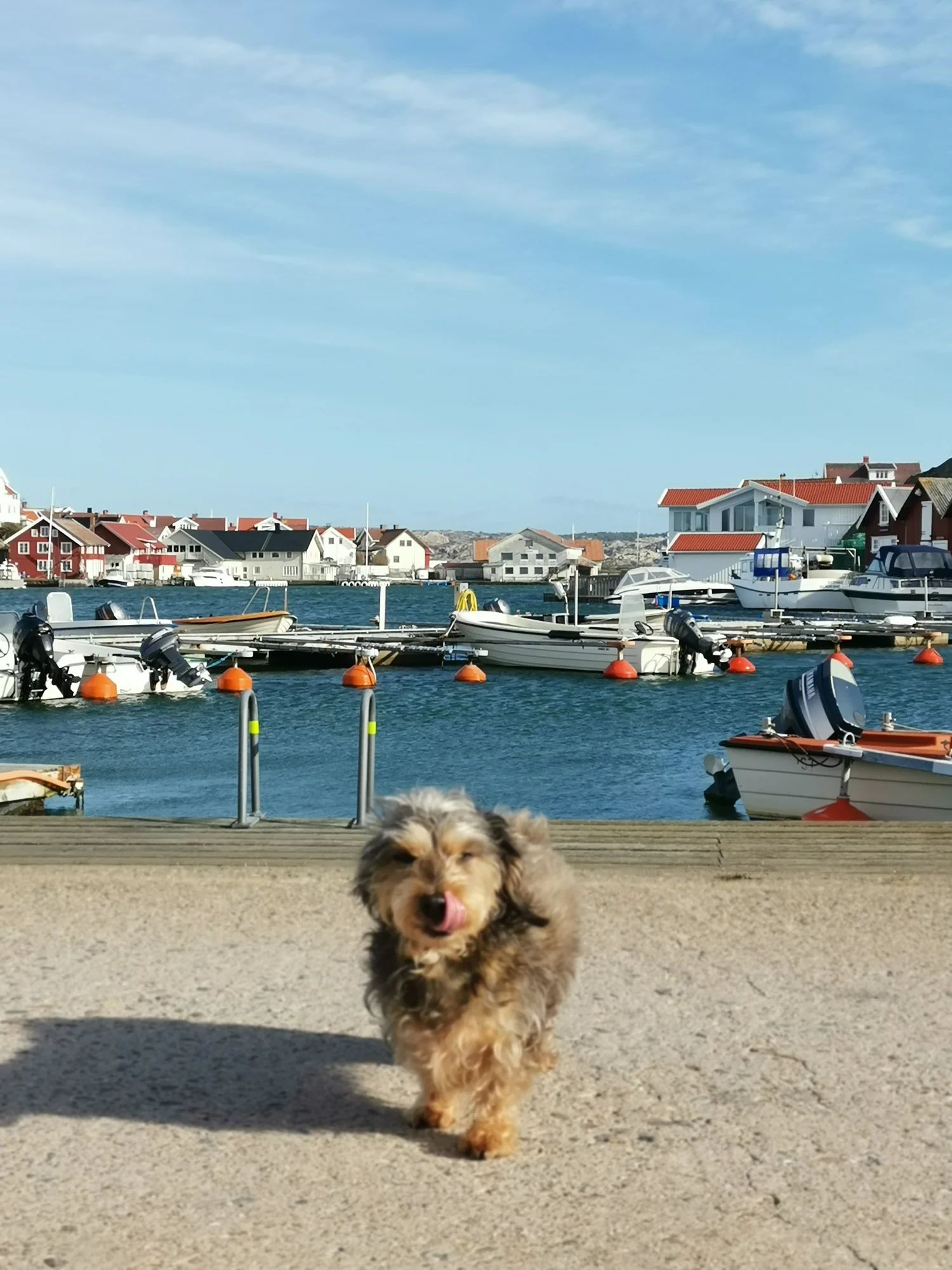
If you've rented a flat with a dog in Germany, for example, you know how it works: the landlord can't ban "usual small animals", a blanket pet ban in the house rules has been invalid since a 2013 ruling by the Federal Court of Justice (BGH), and in a dispute it comes down to weighing up the individual case. As a tenant there, you're unusually well protected.
You can forget that kind of security when you move to Sweden.
Sweden isn't hostile to dogs. Quite the opposite: in the park, in cafés, at the tram stop you'll see more dogs than in many big cities elsewhere. But tenant protection stops at your own front door. What's in the contract applies. What the bostadsrättsförening (housing association) decides applies. And a single neighbour's allergy argument can be enough to get your dog out of the flat.
I moved from Berlin to Gothenburg in 2022 with two cats. Here's a summary of what I didn't know beforehand, and what eventually helped me find the right rental contract three flats later.
The legal situation: not what you'd expect
In some countries, Germany among them, tenancy law actively protects pet owners. In Sweden it doesn't.
With a hyresrätt (a regular rental flat), the rule is: what's in the avtal (rental agreement) is binding. If the landlord adds an "ej tillåtet med husdjur" (no pets allowed) clause, it's valid. The Swedish tenancy law (Hyreslagen, chapter 12 of Jordabalken, the Land Code) covers a lot: protection against termination, rent control, standard obligations. But pets are explicitly not part of statutory tenant protection. You depend on the landlord's goodwill.
With a bostadsrätt (a cooperative flat), things get tighter. Here the bostadsrättsförening decides through its stadgar (statutes) and trivselregler (house rules) whether pets are allowed at all. Once a rule has been adopted, you as a member can't overturn it in an individual case. Three set-ups are common:
- A general pet ban in the stadgar. Usually in older associations, often with fewer than 100 units.
- "Small animals allowed, dogs must be registered". You have to submit size, breed and sometimes the vet's vaccination record to the board.
- Full permission with an allergy clause. Animals are allowed in, but if a member cites an allergy, the board can impose conditions or ban keeping the animal.
The third option sounds fair, but it opens the door to a problem you may never have come across before. More on that below.
What the rental contract or the stadgar actually say
Swedish rental contracts are shorter than in many other countries, but they have their pitfalls. Look for these phrases in the avtal:
- "Husdjur är inte tillåtna": pets completely prohibited. That's final; there's nothing to negotiate.
- "Husdjur efter särskild överenskommelse": pets by separate agreement. You can ask, but you're asking a favour, not exercising a right.
- "Husdjur tillåtna under förutsättning att de inte stör grannar eller orsakar allergiska besvär": pets allowed as long as they don't disturb neighbours or cause allergy problems. Sounds friendly, but it's conditional. A single complaint is enough for a warning.
- "Trivselregler" in the appendix: the house rules. With bostadsrätter, the real rules are often hidden here, not in the main contract.
With a bostadsrätt, ask for two documents before you buy: the stadgar (the association's statutes, with the legally binding rules on keeping animals) and the trivselregler (house rules, with the everyday rules). You get both from the estate agent or directly from the association's board. If you can't get them, that's a warning sign.
The allergy argument: Sweden's quiet trap
In Germany, for example, a neighbour has to prove their allergy with a doctor's certificate, and even then the dog owner often wins a dispute because tenancy law protects pet owners. In Sweden it's the other way round.
The argument goes like this: a member of the bostadsrättsförening, or a neighbour in the stairwell of a hyresrätt building, complains to the board or landlord about allergy symptoms. A doctor's confirmation helps but isn't strictly required. The board looks into it, the landlord looks into it. In most cases, keeping the animal is then restricted or banned, because Swedish association culture relies heavily on consensus and mutual consideration, and an allergy is seen as a legitimate claim that takes precedence over personal lifestyle.
What that means in practice: even if you buy a flat where "pets are allowed", a change on the board or a new neighbour can later get your animal banned. In the association forums on Bostadsrätterna.se you'll regularly find threads about this, and most legal opinion sides with the allergy sufferer.
My advice: when you buy a flat, ask specifically whether there have been any allergy complaints in the association over the last five years. It's a socially awkward question, but it can save you a lot later.
What landlords really want
If you're looking for a flat with a dog or cat, it helps to see things from the landlord's point of view, and to address their worries up front.
What landlords fear:
- Smells and damage to the floor: parquet, varnish, scratches from claws.
- Noise: barking, especially from dogs left alone.
- Stairwells that smell of urine, hair in shared spaces.
- Conflict with other tenants or association members.
What you can offer proactively:
- A pet reference from your last landlord. It doesn't have to be in Swedish; the Swedish landlord will find someone to translate. A short letter saying you haven't caused any damage in recent years and there were no complaints. This is very unusual in Sweden, and that's exactly why it works.
- Pet insurance (djurförsäkring) with Agria, Folksam or Sveland, including liability cover. Costs from 200 SEK/month for dogs, from 100 SEK for cats. Add the proof of insurance to your application.
- A photo of your animal with the application. My tip: a photo of a dog sleeping calmly on a blanket does more than twenty sentences about its temperament.
- Willingness to pay a higher pet deposit. Swedish landlords usually only ask for one month's rent as a deposit, sometimes two. If you have a pet, you can offer an extra month's rent as a deposit without being asked. It isn't common, but it isn't forbidden either, and in a tight market it makes you the most interesting applicant.
Where to find genuinely pet-friendly flats
The big Swedish housing platforms filter for pets badly or not at all. What works:
Qasa.se: here you can tick "Husdjur tillåtna" (pets allowed) in the filter. That removes the obvious no-gos but leaves in the "by arrangement" flats. My impression from ongoing searches in Gothenburg is that roughly one listing in five allows pets. That's my own observation, not a statistic.
Blocket Bostad: bigger selection, worse filter. You have to read the listing text. Search terms for the description: "husdjur ok", "hund tillåten", "katt tillåten" or "djurvänlig".
Boplats Väst: the municipal waiting-list platform. In the advanced filter there's "Tillåtelse för husdjur" (pets permitted), but the selection is small, because most municipal landlords (Familjebostäder, Poseidon, Bostadsbolaget) have general house rules on pets that vary from property to property.
HomeQ: private landlords such as Wallenstam, Stena Fastigheter and Balder. Pets are usually allowed, but restricted in individual properties. Ask directly on the listing.
Facebook groups: the underrated source. "Lägenheter Göteborg", "Hyra lägenhet Göteborg", "Bostäder i Göteborg" have listings every day, often directly from private landlords who explicitly mention pets in the text. Write in Swedish or English; both work. If you write in another language, German for instance, you'll get fewer replies.
Dog-specific platforms:
- Husdjurslägenhet.se: a small portal specialising in flats where pets are allowed. Limited selection, but every flat there is explicitly pet-friendly.
- Asking around at dog schools and dog parks: in Gothenburg, Slottsskogen's hundrastgård (dog run) and Skansparken are the biggest off-lead parks. That's where you get talking to dog owners, and private rentals between acquaintances are more common than you'd think.
Bringing your dog to Sweden: the entry basics
If you're bringing your animal from another EU country (I'll use my own move from Germany as the example), you need:
- An EU pet passport with a valid rabies vaccination. The vaccination can be given at the earliest at 12 weeks of age, and there must be 21 days between vaccination and entry. In practice that means: no dog comes into Sweden before the age of 15 weeks. If you're moving with a puppy, work backwards from that when planning the date.
- A microchip (mandatory in the EU since 2011; your animal should already have one).
- Notification to Jordbruksverket, the Swedish Board of Agriculture, before entry or at the latest when crossing the border. Online form, free of charge.
- Tapeworm treatment: for dogs, 1–5 days before entry (praziquantel as the active ingredient, recorded by the vet).
- Hundregistrering (dog registration) in Sweden with Jordbruksverket, within four weeks of arrival. Registering online costs 80 SEK.
If you're coming from outside the EU, the entry rules can differ, so check the requirements for your country with Jordbruksverket well in advance.
Restricted breeds (fighting-dog-type breeds such as the American Staffordshire Terrier and the Pit Bull Terrier, as Sweden defines them) are subject to special conditions. If your dog is a borderline case, get it checked before you travel, by the relevant body in your home country (in Germany, for example, the Bundesverband Tiergesundheit) or directly with Jordbruksverket. Don't find out at the border.
What the flat hunt realistically costs you
If you're moving to Gothenburg with a dog or cat, plan for:
- A longer search: instead of 4–6 weeks for a comparable flat without pets, expect 6–12 weeks.
- A noticeably smaller choice of listings. What's left tends to be in suburban areas like Mölndal, Partille, Frölunda or Hisingen rather than in the sought-after inner-city neighbourhoods of Linné, Majorna and Vasastan.
- Higher rent or a higher deposit as a compromise. Private landlords who explicitly allow pets usually want something for it. How much is up for negotiation and varies a lot.
- A possible pet deposit demand: some landlords ask for 1–2 months' rent as an extra deposit. Whether that's legally permitted isn't clear-cut, but in practice it can be enforced, because the landlord can always rent the flat to someone without a pet.
My honest recommendation for today
If I were moving to Gothenburg with two cats again today, this would be my order:
- Before the move: check the EU pet passport, renew the rabies vaccination, verify the microchip registration.
- Three months before the move: start searching on Qasa and Blocket Bostad, set the filter to "husdjur tillåtna", set up a saved search for Gothenburg and the suburbs.
- Put a pet reference from your last landlord and a photo of your animal in your application folder. It's the only soft factor that really stands out in a fiercely competitive market.
- Take out a djurförsäkring with liability cover before you sign the rental contract.
- With a bostadsrätt, before buying: ask for the stadgar and trivselregler, ask about the association's history of allergy complaints, and get to know the board in person if possible.
It's more work than in a country with strong pet-owner protection. But it's doable, and the Swedish housing market rewards applicants who come across as organised much more than many others do.
Buying a house in Sweden: practical guide, the in-depth guide on this topic, is currently available in German: view it in the shop.
I'm Sebastian Schiefner, a photographer in Gothenburg, and I help people who are moving to West Sweden with finding a home and buying property. Free intro call.
