Sambolag in Sweden: what you need to know about the cohabitation law
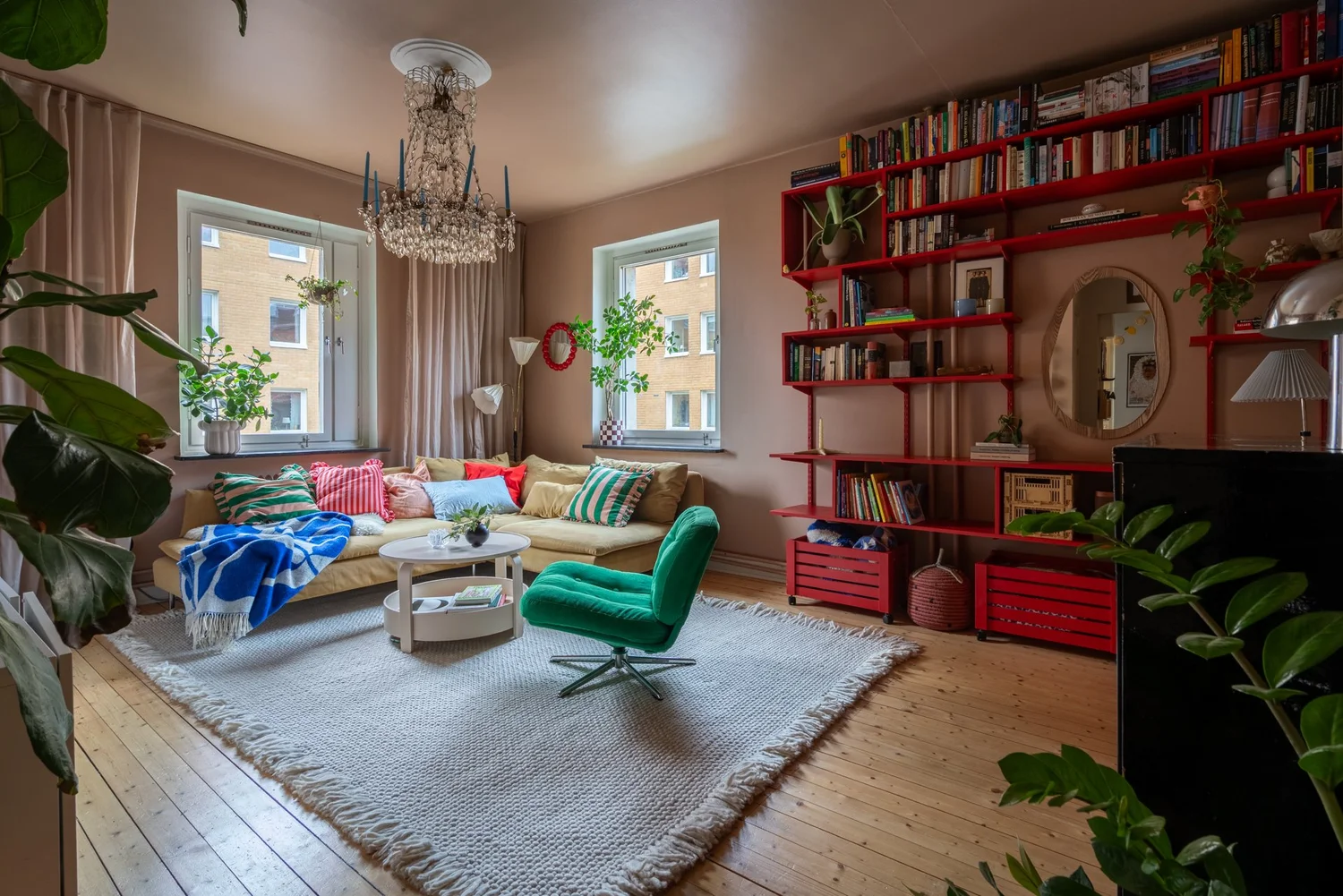
In Sweden, living together without being married is so common that there's a dedicated law for it, and it applies automatically. It has a name and consequences that newcomers almost always underestimate. If you move in with a partner here without thinking about the sambolag, you'll face a division of property on separation or death that you neither wanted nor signed.
I went through this myself in 2022, without realising that my first joint rental contract in Gothenburg already had legal consequences. This is the article I would have needed back then.
What the sambolag actually is
The current Sambolag (2003:376) came into force on 1 July 2003 and replaced the sambolagen of 1987. It governs cohabitation between unmarried couples. Anyone in Sweden who meets two conditions (a shared home and a stable, couple-like relationship) is automatically considered a sambo. There's no form, no application, no signature. The status arises when you move in.
Where I come from, there's nothing comparable: in Germany, for example, the civil code (BGB) has no equivalent, and if you move in with your partner in Berlin or Hamburg, you legally remain two separate individuals. In Sweden, you don't. Don't assume that whatever applies in your home country also applies here.
What the sambolag actually covers
The law applies within a clearly defined area: sambo property. That covers exactly two categories: the shared home and the shared household goods, if both were acquired for joint use.
In practice: if, after moving in, you buy a sofa together, acquire a bostadsrätt (co-op flat) or replace a fridge, you create sambo property. On separation, this property is divided equally at the request of either partner, regardless of who paid for what.
What does not count as sambo property:
- assets you owned before moving in
- individual accounts and savings
- pension entitlements and tjänstepension (occupational pension)
- summer houses, lantställen (country houses) and investment properties (i.e. anything that isn't the shared main home)
- inheritances and gifts received on the express condition that they remain separate
That sounds narrow, but it matters in practice: for most young couples, the shared home is their biggest asset. And that's exactly what the sambolag divides.
A typical newcomer's case
Imagine you move to Gothenburg in 2024, meet a Swede there and move in together in 2025. You finance 80 per cent of your shared bostadsrätt, your partner contributes 20 per cent. Three years later you split up.
Without a samboavtal (cohabitation agreement), the law applies: the flat is divided in equal shares. You put in 80 per cent and get 50 back; well over a third of your stake is gone. It doesn't matter who contributed more: each sambo's share of the sambo property is always half.
This is exactly where, over the last few years, I've seen several people from abroad caught completely off guard. "But we never signed anything." Exactly.
When the sambolag does not apply
Three situations rule out sambo status:
- You're married or in a registered partnership: then the Äktenskapsbalk (Marriage Code) applies, not the sambolag.
- You share a flat without being a couple: flatmates aren't sambos.
- There's a valid samboavtal that excludes parts of the sambo property from the law (see below).
It's possible to register the relationship with Skatteverket (Anmälan om sambor), and that makes sense in some situations, but it isn't necessary for the sambolag to apply. The law works without any registration.
Samboavtal: the most important document you've never heard of
A samboavtal is a written contract in which you agree that certain things should not be subject to equal division. It isn't a prenup-lite; it's a targeted change to the statutory default rule.
What belongs in it if you're contributing different amounts:
- An express statement that the shared home is not sambo property and will not be divided equally on separation
- A clear record of who paid which share of the purchase price
- An agreement on what happens on a sale and how the proceeds are divided
- Household goods: what stays with whom on separation
The agreement must be in writing and signed by both of you. Notarisation is not required. It isn't registered anywhere: unlike a marriage contract (äktenskapsförord), a samboavtal doesn't go to Skatteverket. Keep the signed original somewhere safe or lodge it with a lawyer, so it can be found if there's ever a dispute.
What it costs: with a familjerättsjurist (family law lawyer) in Gothenburg, a standard samboavtal costs 3,000 to 6,000 SEK. Online templates (for example via lexly.se or juridiskadokument.se) start at around 800 SEK, but are only suitable for simple cases without property.
Where most newcomers lose money
There are three classic scenarios in which the sambolag gets expensive:
Scenario 1: unequal financing of the home. You bring 1.2 million SEK in equity from selling your flat back home. Your Swedish partner contributes 200,000 SEK. Without a samboavtal, the home is split 50:50 on separation.
Scenario 2: renovating your partner's flat. Your partner already owned the bostadsrätt before you moved in, so it doesn't count as sambo property. You renovate together for 400,000 SEK. On separation, the property still belongs entirely to your partner. Equal division doesn't apply. Your 200,000 SEK investment is gone unless the agreement says otherwise.
Scenario 3: death without a will. Sambos don't inherit from each other. If your partner dies, their share goes to their parents or children, not to you. You're only entitled to your half from the sambo division; the rest goes to the heirs. In the worst case, that means the home you live in becomes part of the estate and is sold, without you being able to prevent it. A mutual will (inbördes testamente) solves this problem; it also costs 3,000 to 5,000 SEK with a lawyer.
Practical advice for your first move-in as sambos
If you're moving in together in Sweden and one or both of you come from abroad:
- Draw up a samboavtal before you move in if you have different amounts of equity or are buying a bostadsrätt. Before moving in is legally cleaner, because the evidence is clearer.
- Add an inbördes testamente if you want to protect each other financially. The sambolag deals with property, but not with inheritance.
- Register as sambos with Skatteverket if you want to claim shared advantages (joint health insurance entitlement for family members from EU countries, a joint tax return for foreign income, a certificate of residence for authorities in your home country, such as the German authorities).
- For larger purchases during your time as sambos, record in writing who paid for what: keep receipts, document bank transfers. In a dispute, what counts in the end is what can be proved.
If you want to get married: a short comparison
Sambo isn't "marriage-lite". If you marry in Sweden, the Äktenskapsbalk applies, and that's structured differently again. The main differences:
- Scope of property: in a marriage, all property is divided, not just the home and household goods. If you marry without a marriage contract, on divorce you split equally everything that hasn't expressly been declared separate property.
- Inheritance: married couples inherit from each other automatically. Sambos don't.
- Tax: for tax purposes it makes hardly any difference in Sweden; assessment is always individual.
If you're planning to build up assets together in the long term and don't care about the wedding ritual, sambo + a well-drafted agreement + a mutual will is often the more pragmatic route. But if you want maximum legal clarity, go for a borgerlig vigsel (civil wedding at the kommun, often possible on the same day, free of charge) plus an äktenskapsförord (marriage contract).
What you should do today
If you're moving in together right now or planning to: sit down for an hour, talk openly about money and write down three points: who brings what, who pays what each month, what happens if you split up. Take those three points to a familjerättsjurist and have a samboavtal drawn up from them. The 5,000 SEK is the cheapest insurance you'll take out in your first two years in Sweden.
If you've already been living together for a while: it's never too late. An agreement signed today applies from the day it's signed. What happened before can't be neatly sorted out after the fact, but you can settle everything from today onwards.
Need a specific recommendation for a familjerättsjurist in Gothenburg, or have a particular sambo question? Book a free 15-minute intro call, and I'll happily put you in touch with someone from my network.
Read more: Hyresrätt, bostadsrätt, andrahand: Swedish housing types explained simply | What buyers really need to check in a bostadsrättsförening
Buying a house in Sweden: practical guide: the in-depth guide to this topic is currently available in German. View it in the shop.
I'm Sebastian Schiefner, a photographer in Gothenburg, and I help people who are moving to West Sweden with finding a home and buying property. Free intro call.
