Alla helgons dag in Sweden: why the cemeteries glow at the end of October, and how it relates to All Saints' Day
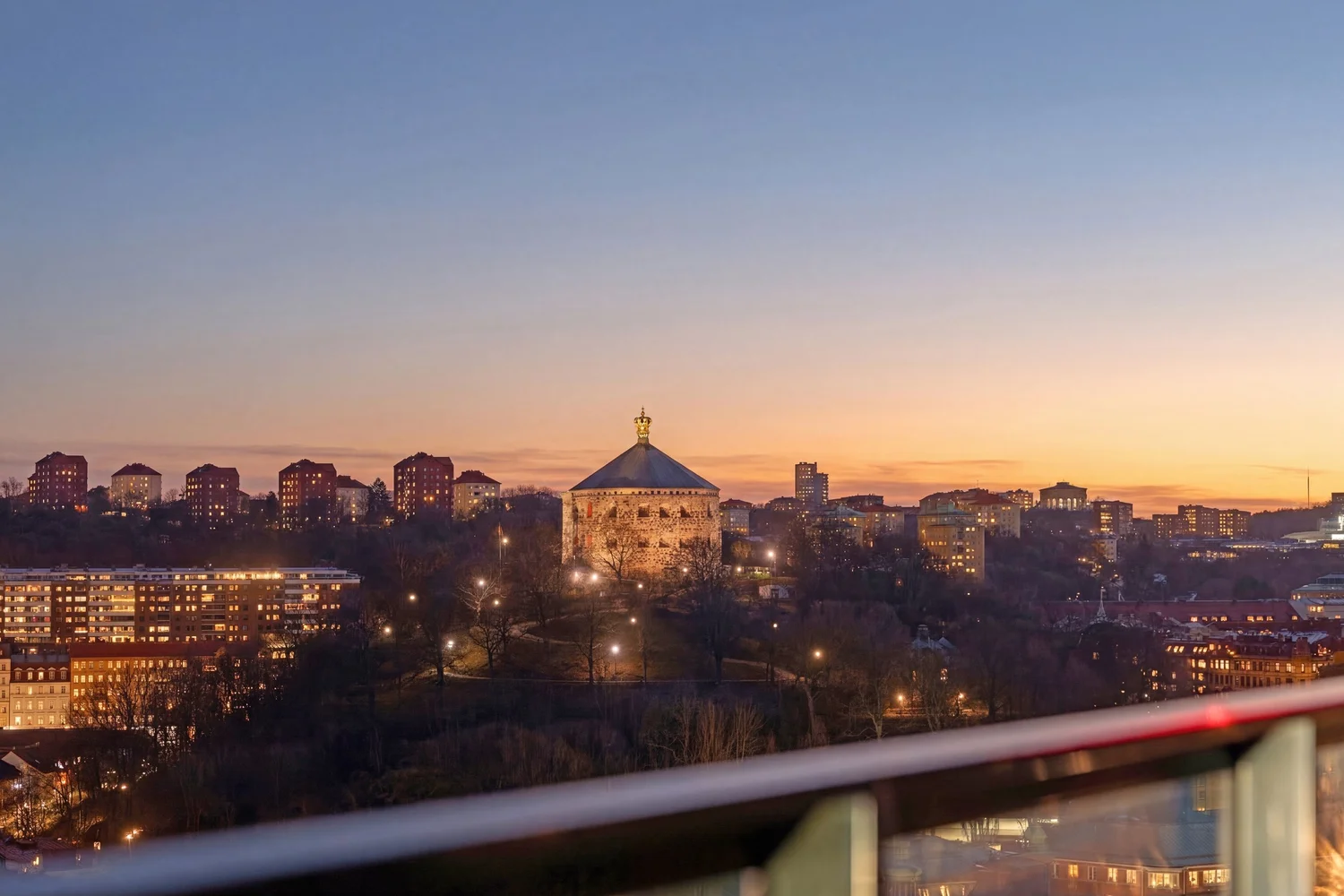
There's one day in autumn in Sweden when the cemeteries are fuller than any church. No procession, no music outdoors, no crowds: people walk along the paths at dusk with a candle in their hand, set it down and stand still for a moment. Alla helgons dag. If you come from a country that marks All Saints' Day, you'll recognise the motif and put it in the wrong box: All Saints, first of November, I know that, you think. Neither is quite right.
The day is a Saturday, and that's the law
Alla helgons dag has no fixed date. The law on public holidays sets it as "den lördag som infaller under tiden den 31 oktober–6 november", the Saturday that falls between 31 October and 6 November (lag 1989:253, § 2). In 2026 that's 31 October.
Before 1953 the holiday was on 1 November. Since the reform, only the Saturday has been a public holiday (Isof, Frågelådan). That has a consequence you only notice as a newcomer when you look in the calendar and find nothing: a holiday that by design always falls on a Saturday gives nobody a weekday off. It's a röd dag (a "red day", i.e. public holiday) in the calendar and on your payslip (if you work that Saturday you usually get an OB-tillägg, an unsocial-hours supplement), but it doesn't make for a long weekend.
The Friday before is called allhelgonaafton, so 30 October in 2026. It isn't a public holiday. Whether people go home at lunchtime isn't set by law but by the collective agreement, and that varies from sector to sector (SD Worx). If in doubt, ask your colleagues, not the internet.
Three names, three different days
Even Swedes occasionally mix these up, and in translation it gets even more confusing. Three terms that don't mean the same thing:
Allhelgonadagen is always 1 November, whatever the day of the week. This is the day that corresponds to All Saints' Day as many other countries know it. In Sweden it's no longer a public holiday.
Alla helgons dag is the Saturday, 31 October in 2026. That's the public holiday.
Alla själars dag is the Sunday after, 1 November in 2026. In the church calendar it's the day for remembering your own dead; the theme of the Sunday is "Vårt eviga hopp", our eternal hope (Svenska kyrkan). The weekend as a whole is called allhelgonahelgen.
In 2026, Allhelgonadagen and alla själars dag both fall on Sunday 1 November. Only when 1 November itself is a Saturday are Allhelgonadagen and alla helgons dag the same day, and the next time that happens is not this decade.
How it compares: All Saints' Day in Germany
To show how differently the same feast can work, let's take Germany as the example. There, Allerheiligen (All Saints' Day) is a public holiday in Baden-Württemberg, Bavaria, North Rhine-Westphalia, Rhineland-Palatinate and Saarland, on the fixed date of 1 November. In Bavaria it's listed without any regional restriction in Art. 1 of the Public Holidays Act; the Assumption, by contrast, only applies there in predominantly Catholic municipalities. All Saints' applies across the whole state.
2026 is a year in which both countries miss out: in Germany, All Saints' falls on a Sunday, and Reformation Day on 31 October (a public holiday in nine northern and eastern federal states) falls on the Saturday. So if you've moved to Gothenburg from Cologne or Munich, you're not losing anything this year that you wouldn't have lost anyway.
The real difference isn't the calendar but how public the day is. In Germany, All Saints' is above all a "quiet" holiday, with a ban on dancing and shops closed. In Sweden it's a normal shopping Saturday (with one exception I'll come to below) and at the same time the day when cemetery staff stand in tents serving coffee. Remembrance here is less protected and more visible at the same time.
Halloween falls on the same date this year
Halloween is on 31 October, so in 2026 it lands exactly on alla helgons dag. That's a coincidence of the calendar, not two customs merging: Halloween only caught on in Sweden in the 1990s, and it comes from allhelgonaafton, the evening before All Saints (Isof).
In practice that means: children in costumes around the neighbourhood in the afternoon, candlelight in the cemeteries in the evening, on the same day. Side by side, not mixed together. If you confuse the two and turn up at a cemetery with Halloween decorations, you've got it as wrong as someone who mistakes Valborg for an Easter bonfire.
What actually happens in Gothenburg that Saturday
Göteborgs begravningssamfällighet, the body that runs the city's cemeteries, manages 36 burial grounds with around 119,000 graves and publishes the arrangements for the day itself every year. For 31 October 2026 (source):
- Örgryte nya kyrkogård and Östra kyrkogården are completely car-free from 11 am to 6 pm. Extra parking is available at Östra kyrkogården along Kålltorpsgatan.
- Kvibergs kyrkogård runs a one-way system: in via Kortedalavägen, out towards Varnhemsgatan and Gamlestaden. The restriction applies from Friday 30 October to Sunday 1 November.
- Västra kyrkogården closes several paths, especially below the memorial and ash groves, from 10 am on Saturday until Sunday morning. You can get in through the main entrance; the closure starts further inside, level with St Matthew's Chapel.
- Färdtjänst (the transport service for people with disabilities) and Flexlinjen are exempt from the restrictions.
From 11 am to 6 pm, staff are on hand at seven sites (Billdal, Fridhem, Kviberg, Lundby nya, Västra, Örgryte nya and Östra) in tents, offices and chapels, helping people find individual graves and handing out visitor maps. There's coffee, squash and pastries too. The chapels are open during the same hours: music services in Fridhems kapell at 2 and 4 pm, in Sankt Lukas kapell at Västra kyrkogården at 1, 2, 3 and 4 pm, where there's also a roughly twenty-minute children's programme about death at 1:30, 2:30, 3:30 and 4:30 pm. In Sankt Olofs kapell at Kviberg, the Croatian Catholic Mission holds mass at 11 am, and in Östra kapellet the Härlanda parish holds services at 4 and 5 pm.
If you're looking for a particular grave and don't know where it is: search for the name on svenskagravar.se, and the results page shows a map.
Which candles are allowed on graves, and which aren't
This is where newcomers most often get something wrong, and there are clear rules:
- Gravljus (grave candles) go in the holders provided. Pillar candles are not allowed, because they melt and leak.
- In memorial and ash groves (minneslund, askgravlund), only cut flowers and grave lights may be placed on the shared decoration spots. Spruce arrangements and outdoor torches (marschaller) aren't allowed there.
- Items that aren't allowed are removed within a few days, without notice.
- Decorations without plastic and without metal wire can be composted and are therefore welcome.
- LED lights count as electronic waste. There are red containers for them, which are also for batteries.
And one small thing that can save your visit: the summer water taps are usually turned off in mid-October. Winter water points only exist at some sites and are often a little way off. Take a bottle of water with you. Toilets are only available in chapels and office buildings, and only where staff are present between 11 am and 6 pm.
Practical things for the weekend
Systembolaget is closed on Saturday 31 October. Alla helgons dag is a röd dag, and on röda dagar its shops stay closed. On Friday the 30th, normal opening hours apply (Systembolaget). If you want wine with dinner on Saturday, buy it on Friday. It's one of those things you learn once and never forget.
Other shops keep normal Saturday hours.
In Gothenburg, the höstlov (autumn school holiday) falls before the weekend, not over it. In the 2026/2027 school year it runs from 27 to 30 October, week 44; Monday 26 October is a closure day for schools and fritidshem (after-school care) (Göteborgs Stad). The weekend after is the first one when everyone is back together. If you're here with children, it's worth knowing for your planning.
Wear something reflective. The samfällighet explicitly recommends hi-vis vests, especially after dark. That sounds over the top until the first time you're standing on an unlit cemetery path in Gothenburg's late-October dusk. At the end of October the sun sets in Gothenburg in the late afternoon, and how quickly it really gets dark after that is something you'll reliably underestimate in your first year.
If you don't have a grave here
That's the most common situation for newcomers, and at first it feels strange: a holiday for the dead, and your own are a thousand kilometres or more away. There are two ways to handle it, and both are fine.
One: go anyway. Östra kyrkogården or Västra kyrkogården on a Saturday evening at the end of October isn't a place where you'll be in the way as an outsider. There's no part of the programme you'd need to belong to, and nobody checks whose grave you're visiting. I moved from Berlin to Gothenburg in 2022, and in my experience this is one of the few public occasions here that works without joining in: you're part of it simply by being there.
The other: Svenska kyrkan (the Church of Sweden) offers a digital grave candle at be.svenskakyrkan.se/allhelgona, explicitly for those who can't get to a cemetery. Whether that means something to you is for you to judge.
What I wouldn't recommend is ignoring the day altogether. It looks like folklore and it isn't. It's the quietest holiday of the Swedish year, and it explains more about how people here relate to seasons and light than the loud half of the calendar, from Midsommar to Lucia.
Gothenburg neighbourhood guide, the in-depth guide on this topic, is currently available in German: view it in the shop.
I'm Sebastian Schiefner, a photographer in Gothenburg, and I help people who are moving to West Sweden with finding a home and buying property. Free intro call.
