Fastighetstaxering 2027: what the letter from Skatteverket means and what you need to do by 2 November
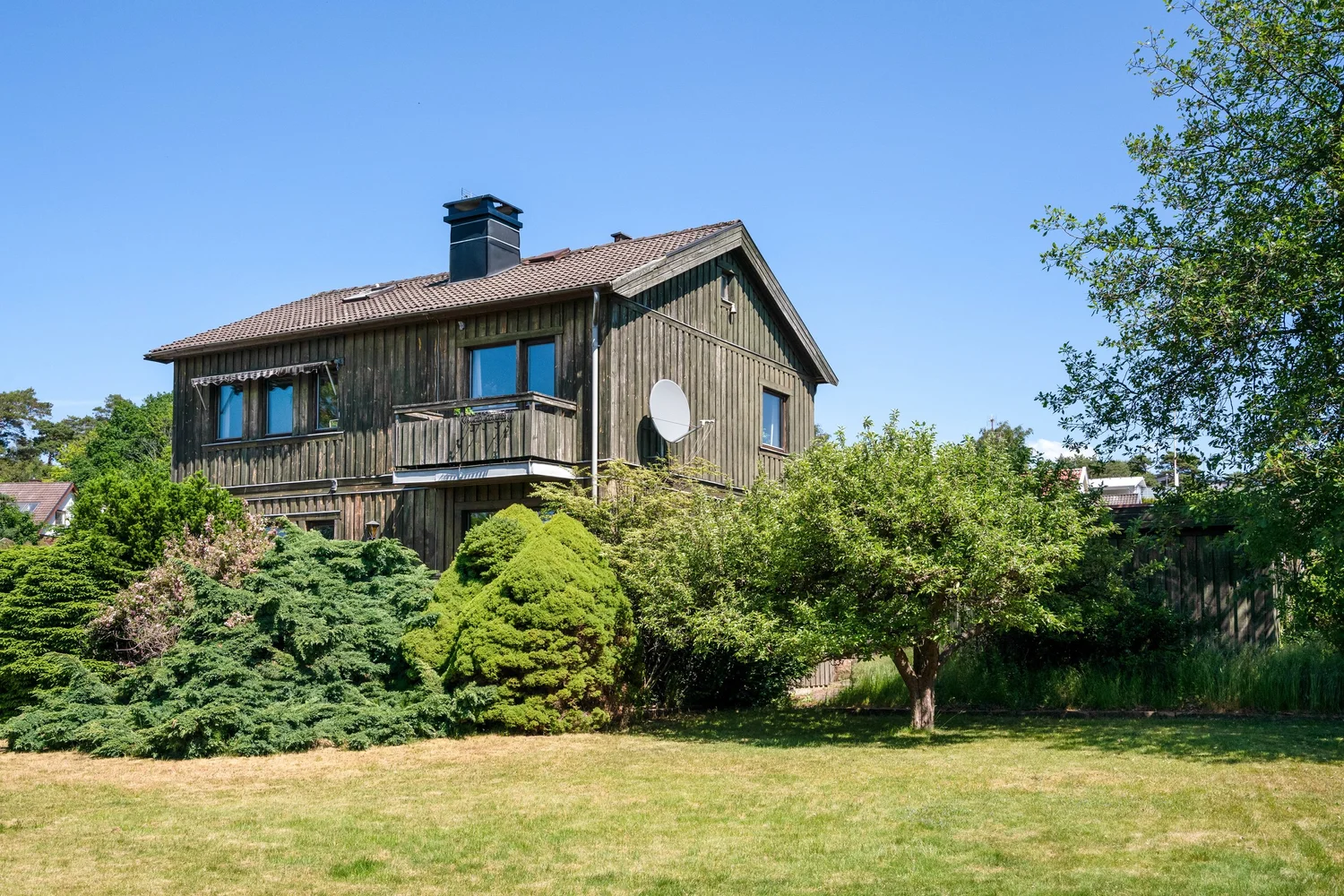
If you own a house in Sweden, something from Skatteverket (the Swedish Tax Agency) has been waiting for you since September: digitally on 7 September, on paper at the end of September or the beginning of October. It is not a bill. It is a request to declare your property, and the deadline is Monday, 2 November 2026.
The letter is both more harmless and more dramatic than it looks. More harmless, because many recipients really don't have to do anything. More dramatic, because the figure that comes out of it is tied to more things in Sweden than property tax is in many other countries.
What is happening right now
For småhus (single-family houses), 2027 is an allmänt fastighetstaxeringsår, a general property assessment year. It doesn't happen every year. Skatteverket puts it like this: "Du som äger en fastighet ska deklarera den vart tredje eller vart sjätte år" (if you own a property, you must declare it every third or every sixth year). For single-family houses, that means the big round every six years, with a simplified one in between. Outside these rounds, a property is only reassessed if something substantial has changed about the house.
More than two million homeowners are affected. All information must reflect the situation on 1 January 2027, not the state of things today. If you convert your basement before the end of the year, you declare the converted basement.
The e-service has been open since 7 September. Skatteverket will send out the decision with the new taxeringsvärde digitally in mid-June 2027, and on paper at the beginning of July.
First check whether you need to do anything at all
This is where the post splits into two kinds, and which one you get decides how much work you have.
Most people receive a förslag till nytt taxeringsvärde, a proposal. Skatteverket already has the data, does the calculation itself and presents you with the result. The authority's website has the reassuring sentence: "Om du har fått ett förslag till nytt taxeringsvärde behöver du inte göra någonting" (if you have received a proposal for a new taxeringsvärde, you don't need to do anything). If everything is correct, you let the deadline pass and you're done.
The others receive a fastighetsdeklaration (property declaration) that needs to be filled in. And there is one case where many people get it wrong: if there are several owners, the post only goes to one person, usually the one listed first in the lagfart (registration of ownership). If you bought together with a partner or siblings and found nothing in your letterbox, that doesn't automatically mean you're off the hook. Ask who received the declaration. The decision in June, on the other hand, goes to each owner individually.
If you submit late, you risk a förseningsavgift (late fee). Skatteverket does not publish the amount on its pages about fastighetstaxering. I have not found a reliable figure for it, so I'm not giving one.
What the taxeringsvärde actually is
The taxeringsvärde (assessed value) is not the market value and isn't meant to be. The rule: 75 per cent of the probable market value, but not of today's. What counts is the price level two years before the assessment year. For this round, in Skatteverket's words, "försäljningspriserna 2023–2025" (the sale prices of 2023–2025) apply.
That explains why the figure so often feels strangely out of step: it describes a market that is already over. Nationwide, taxeringsvärden are falling by an average of 3 per cent this time. In Västra Götaland it is minus 4 per cent, across just over 347,000 houses. The steepest drops are in Västmanland (minus 8), Stockholm and Södermanland (minus 7 each); only the north is moving up, with Norrbotten at plus 6 per cent.
If you are buying a house in Bohuslän right now and comparing the figures in the listing, you will see the same effect: the taxeringsvärde shown is a rear-view mirror, not a price tag.
What you are asked for, and where it hurts
The declaration wants figures, not estimates. It asks, among other things, for the size of the plot, the type of building, drinking water and sewage, the property law situation, and three fields where foreign owners regularly get stuck.
Boyta and biyta. Boyta is the living area. Biyta is everything that is not living area but can be reached from inside the house: Skatteverket mentions verandas, basements, storerooms and garages. The key words are "reachable from inside". A detached garage is not biyta; the same garage with a door through to the hallway is. If you estimate this using the rules from your home country (Germany's Wohnflächenverordnung, for example), you will get it wrong.
Standardpoäng (standard points). The house is given points in five groups: exteriör (exterior), energihushållning (energy efficiency), kök (kitchen), sanitet (sanitation) and övrig interiör (other interior). This is the part where a renovated kitchen shows up in the tax assessment. No reason to fudge it, but a reason to check carefully whether the pre-filled information is still correct.
Avstånd till hav, insjö eller vattendrag (distance to the sea, a lake or a watercourse). The distance to water is a separate field. On the west coast this is not a minor detail, but one of the strongest drivers of value there is. I photograph several hundred properties here every year, and in the listings, "sea view" and "water within walking distance" are worlds apart. In the assessment, the gap between them is a number in metres.
Then there is the värdeår (value year), usually the same as the year of construction. Remember it, because it comes up again shortly.
What the new figure costs you: usually nothing
Now the part that takes most of the drama out of the topic.
The municipal fastighetsavgift (property fee) is derived from the taxeringsvärde: 0.75 per cent. But it is capped. For the 2026 income year, the cap is 10,425 kronor per residential building (2025: 10,074). Mathematically, the cap kicks in from a taxeringsvärde of around 1.39 million kronor, and practically every house in Gothenburg and on the coast is above that value.
The result: if your taxeringsvärde falls from 3.2 to 3.05 million, your fee doesn't change at all. You pay the capped amount before and the capped amount after. Quoting the percentage without mentioning the cap is the most common mistake in German-language articles on the subject.
Two exceptions are worth a look. First: houses with a värdeår of 2012 or later are completely exempt for 15 years. A värdeår of 2026 means exemption for the income years 2027 to 2041. Second: for a house under construction, there is no fee but a state fastighetsskatt (property tax) of 1 per cent, with no cap.
Skatteverket has not yet published the amount for the 2027 income year, which the new assessment affects. It usually rises in line with the inkomstbasbelopp (income base amount).
Where else the taxeringsvärde bites
The fee is not the only place where the figure turns up, and when you buy, it can cost you even more than the annual fee.
The stämpelskatt, the stamp duty when buying a house, is 1.5 per cent for private individuals, but not of the purchase price; it is calculated on the higher of the purchase price and the taxeringsvärde. In a market with falling taxeringsvärden, that is usually the purchase price. In a segment where taxeringsvärden are rising and prices are stagnating, it can tip the other way. I explain how this adds up with pantbrev and lagfart in the article on stämpelskatt and pantbrev.
The bank also looks at the figure, and it appears in every Hemnet listing. If you are in the middle of a purchase, you will find the order of the steps in the guide to the Swedish house-buying process. And if you own a lantställe or summer house: that is also a småhus, and it's also up for assessment.
How it compares: Germany as an example
If you have owned property elsewhere, your reflexes from home may not apply here. Germany is a good example, because German owners still have the property tax reform fresh in their minds.
In Germany, under § 221 of the Bewertungsgesetz (Valuation Act), property tax values are "in Zeitabständen von je sieben Jahren allgemein festgestellt" (generally assessed at intervals of seven years). The first main assessment was as of 1 January 2022, the main tax assessment as of 1 January 2025. That was the huge exercise in which everyone had to file a declaration.
Sweden does the same every three or six years, but on a small scale. No reform, no special case, just a routine that comes round regularly and involves you every time. That is the real difference: not the level of the fee (which is capped and moderate compared with Germany), but the frequency, and the fact that the figure turns up again when you sell and when you buy. You'll see how the overall tax burden is distributed in the comparison of the tax systems.
A side detail that has caught many newcomers off guard: this year, the paper forms only went to people without a digital mailbox. If you have set up a digital brevlåda (mailbox), you received your documents on 7 September, in a place where you might not be looking.
What you should do by 2 November
First check what you have actually received: a proposal or a declaration. If it says "förslag till nytt taxeringsvärde" and the details are correct, you're done.
If something isn't right, or if you have received an actual declaration, check three things against the situation on 1 January 2027: boyta and biyta, including the rooms reachable from inside; the standard after your latest renovations; and the distance to the water.
If the house has several owners, find out today who received the post. Not on 1 November.
And when the new figure arrives in June 2027: don't immediately expect a higher bill. If your taxeringsvärde is above around 1.39 million kronor, you pay the capped amount anyway, whichever direction the value has moved.
Buying a house in Sweden: practical guide, the in-depth guide on this topic, is currently available in German: view it in the shop.
I'm Sebastian Schiefner, a photographer in Gothenburg, and I help people who are moving to West Sweden with finding a home and buying property. Free intro call.
