Strandskydd: what you're allowed to do on a waterfront plot in Sweden
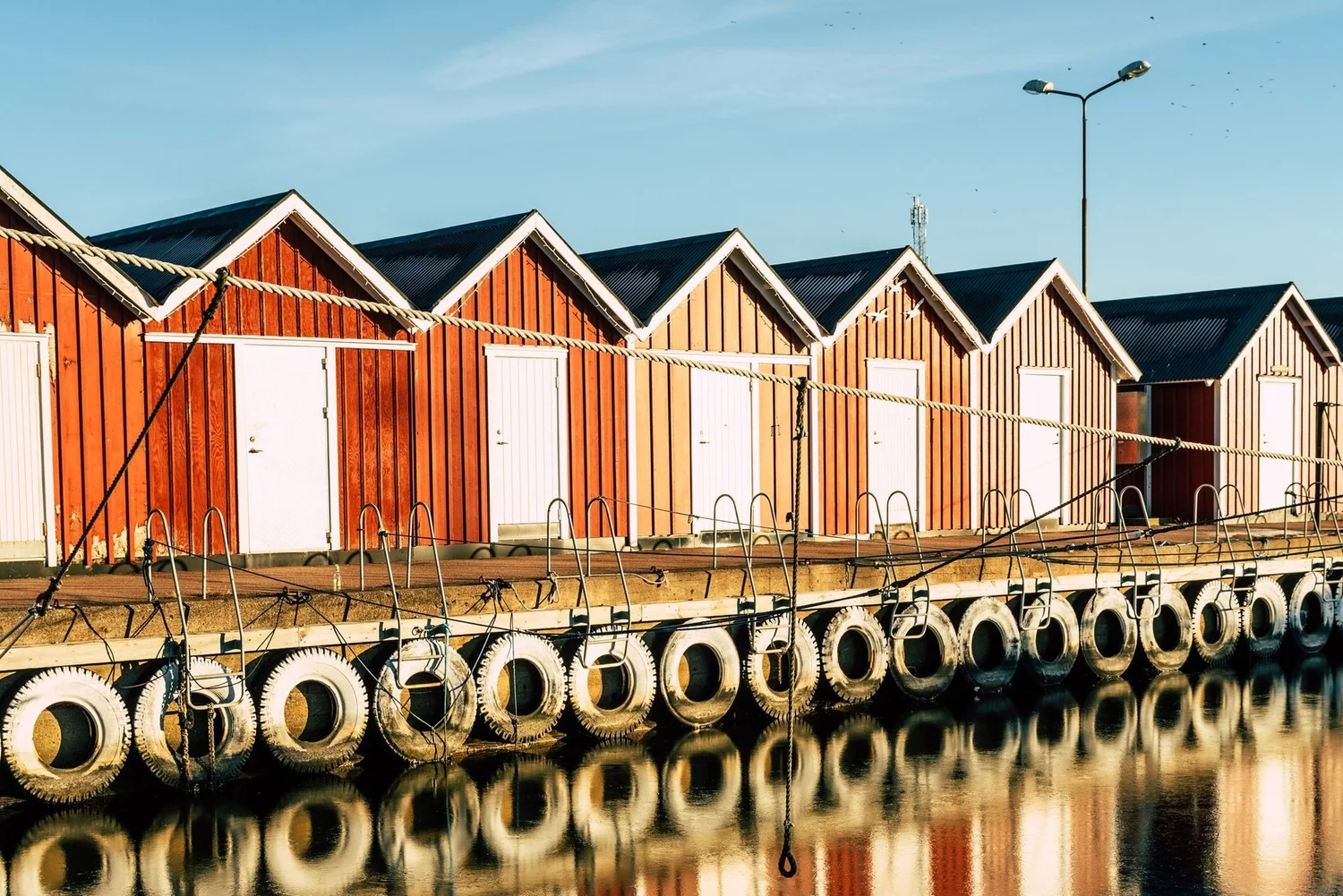
Imagine you've done it. The stuga in Bohuslän you've been looking at for years is now yours. Granite rocks, a stretch of shoreline, a view of the water. The first thing you plan: your own jetty, so the boat is moored right outside the door. Maybe a small sjöbod (boathouse shed) for the tools too, and a fence so the dog doesn't run off.
And then you learn the word that isn't printed in bold in any listing: strandskydd.
I saw this often enough in my first years on the west coast: acquaintances who had bought a waterfront plot and then sat across the desk from the municipality in disbelief. The assumption "my land, my shore, my decision" is deeply rooted in many countries, very much including Germany, where I come from. In Sweden it doesn't hold. And that very gap regularly costs buyers from abroad money, nerves and sometimes half the dream.
Let's go through it properly before you sign anything.
What strandskydd actually is
Strandskydd is Swedish shoreline protection, set out in the Environmental Code (Miljöbalken, chapter 7, sections 13–18). It has two aims, and at first neither of them has anything to do with you as the owner. First, it is meant to permanently secure the public's free access to the water; it's the sister of allemansrätten, the Swedish right of public access. And second, it is meant to protect animal and plant life along the shore.
In practice, a protected zone of 100 metres applies from the shoreline, in both directions. 100 metres inland and 100 metres out into the water. Where the shore is particularly worth protecting, the länsstyrelse (the county administrative board) can extend the zone to up to 300 metres. That's exactly the case along parts of the Bohuslän coast and in the Gothenburg archipelago.
Within this zone, as a rule, you may not build anything new, change anything or dig anything up, nor do anything that keeps the public from accessing the shore or harms nature. Even if the land officially belongs to you.
Feel free to read that last sentence twice. It's the point where most of the reflexes people bring from home fail.
What exactly the ban covers
The list is longer than most people expect. Within the strandskydd zone, you will usually need an exemption for:
Jetty and brygga: the classic. A new boat jetty almost always needs permission, often twice over (more on that in a moment).
Sjöbod, gäststuga (guest cabin), garden shed, extension: any kind of outbuilding, including small ones. The former special categories "friggebod" and "attefallshus" have not been legal terms since 1 December 2025; within the strandskydd zone they never exempted you from the permit requirement anyway.
Fences, hedges, flagpoles, terraces, pools: anything that marks out a "private territory" and in practice keeps walkers away.
Larger interventions in the landscape: blasting rock, felling trees on a large scale, filling in ground, laying paths.
Mistake number one: many newcomers have heard of the friggebod and the attefallshus and that you were allowed to put them up without bygglov (planning permission). These special categories ceased to exist on 1 December 2025, and even when they did, bygglov-free by the water never meant strandskydd-free. They are two completely separate assessments, and on the shoreline, shoreline protection almost always wins.
The jetty is a special case, and the most expensive one
The boat jetty deserves its own section, because it's the most common question among my readers. A new jetty usually needs two steps with the authorities:
a strandskyddsdispens (the exemption from shoreline protection), and
possibly a notification or permit as vattenverksamhet (water operations) with the länsstyrelse, because the jetty involves work on the seabed or lakebed.
Two authorities, two procedures, two waiting times. If you simply start building because "the neighbour has one too", you risk an order to demolish it at your own expense. And an illegally built jetty doesn't disappear by itself when you sell. It becomes the next owner's problem, and therefore potentially a reduction in your sale price.
If you're toying with the idea of a mooring anyway, read my article on båtplats in Gothenburg first. A club or municipal mooring is often the quicker and legally safer way onto the water than your own jetty. And if you want to take the helm yourself, check first whether you need a boating licence in Sweden (förarintyg).
Free authorities roadmap for your first month in Sweden. Personnummer, Skatteverket, Migrationsverket: the order you do things in determines how quickly everything moves. My free roadmap shows you step by step what's due when. Go to the roadmap →
When you get an exemption: the six "särskilda skäl"
An exemption (strandskyddsdispens) is normally granted by the municipality (in specially protected areas, by the länsstyrelse). And it doesn't do this on a whim, but only if one of exactly six special reasons laid down by law applies: the särskilda skäl from chapter 7, section 18 c of the Miljöbalken. There are only these six, and you have to meet at least one of them:
The area has already been taken into use in such a way (for example, it lies within an existing, clearly defined private garden) that it has lost its importance for shoreline protection.
The area is clearly separated from the shore by a road, railway line, buildings or other development.
The area is needed for a facility that, by its function, has to be located by the water (such as a jetty), and the need can't be met outside the zone.
The area is needed to expand an existing business that can't be moved outside the zone.
The area has to be used for an urgent public interest.
The area has to be used for another very urgent interest.
For private buyers, it's mainly points 1 and 3 that matter in practice. If your planned extension lies within the already established tomtplats (the private zone defined by the authority), your chances are good. If the little house is in the middle of the untouched strip of shoreline, they're poor, however much you want it.
It's important to understand that even if you get an exemption, the municipality sets the tomtplatsavgränsning, the boundary of your private area. Beyond that line, the public keeps its right of access under allemansrätten. So the stranger climbing over your rock to go for a swim may be entirely within their rights.
What changed in 2025, and what didn't
This is the up-to-date part, so pay attention. On 15 May 2025, the Swedish parliament (Riksdag) passed a reform that came into force on 1 July 2025. The key points:
At small lakes (under 1 hectare) and narrow watercourses (under 2 metres wide), general strandskydd no longer applies.
It also no longer applies to bodies of water created artificially after 30 June 1975.
However, the länsstyrelse can reintroduce protection at such small waters if they are particularly worth protecting.
Exemptions for agricultural and forestry needs and for aquaculture were extended.
It sounds like a relaxation of the rules, and for a small woodland plot by a pond inland, it is. But here's the sentence that matters for my readers: nothing changes for the sea coast and the large lakes. Bohuslän, the Gothenburg archipelago, Vänern: there, strandskydd still applies unchanged at 100 to 300 metres. So exactly where most people from abroad look for their summer house, the protection remains fully in force.
And things are still moving: in parallel, the government has commissioned a further, more comprehensive reform (committee directive 2025:59, "Ett reformerat strandskydd"). What will eventually become law is not yet clear at the time of writing. So never rely on a blog article, not even mine, as the final word. Always ask the responsible municipality about the current situation for your specific plot.
Your checklist before buying a waterfront property
If you have your eye on a stuga or a villa by the water, work through these points before you join the bidding:
Ask the mäklare (estate agent) directly whether the existing jetty, sjöbod or extensions have a valid strandskyddsdispens. "It's always been there" is not a permit.
Call the municipality: the miljöavdelning (environment department) or the byggnadsnämnd (building committee). They'll tell you whether the 100 or 300-metre zone applies and where your tomtplats lies.
Don't count on any alterations in your plans until an exemption is in sight. An exemption procedure often takes several months and costs a municipal fee, and the outcome is never guaranteed.
Don't let anyone sell you illegal structures as added value. A jetty without a permit isn't an asset; it's a demolition order waiting to happen.
Remember the undersökningsplikt. In Sweden, the buyer carries the duty to inspect: you have to find out for yourself what legally applies on the shore. Nobody is going to fill you in after the sale.
If you want to dig deeper into the mechanics of buying a summer house, my overview of buying a summer house in Bohuslän covers the prices and the market.
My honest advice
Strandskydd isn't a bureaucratic nuisance to grumble about. It's the reason the Swedish coast looks the way it does. No built-up seafront promenades, no private fences down into the water, no "Keep out" every 50 metres. When I travel through the skerries with my camera and have free access to granite and water everywhere, that's no coincidence. Behind it lies the same attitude as friluftsliv, Sweden's outdoor culture. That's strandskydd.
What that means for you: don't approach your waterfront plot with the property-owner reflex you know from home, but with respect for a system that benefits you too. Plan realistically, ask the municipality first, and don't count on the jetty until it's been approved. Then your shore in Bohuslän will become exactly what you moved to Sweden for.
Planning a specific purchase by the water and unsure about the strandskydd situation? Write to me at hallo@nordabenteuer.de or book a free intro call. We'll look together at what's realistically possible on the plot you have in mind.
Buying a house in Sweden: practical guide, the in-depth guide on this topic (currently available in German): view in the shop.
I'm Sebastian Schiefner, a photographer in Gothenburg, and I help people who are moving to West Sweden with finding a home and buying property. Free intro call.
