Snow clearing and gritting in Sweden: what you actually owe as a homeowner
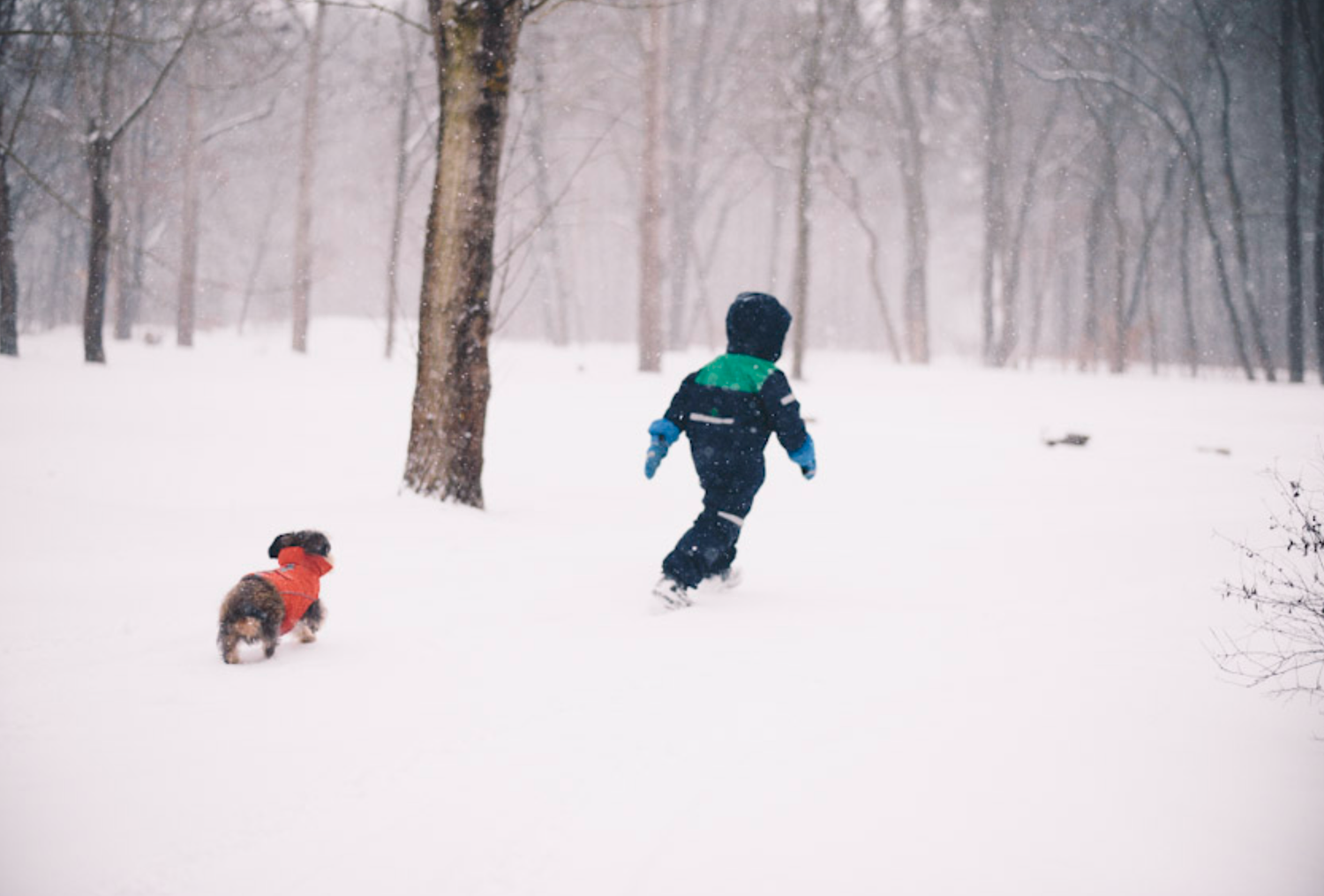
Winter on the west coast is usually wetter than it is white. I'm out here all year round for property viewings, and in January I see more rain than snow. Then fifteen centimetres land overnight, and a question comes up that nobody prepared you for: do you have to clear it? How far? By when?
In Germany, most tenants roughly know the answer: the duty to clear and grit is set out in the city's bylaws, it comes with fixed times, and anyone who ignores it is liable. Sweden has no nationwide deadline and no nationwide width, but it does have a duty. Where that duty comes from is the point of this article.
Why there is no Swedish clearing duty
The starting point is Lag (1998:814) med särskilda bestämmelser om gaturenhållning och skyltning, the act on street cleaning and signage. Two of its sections decide everything.
§ 2 says the kommun (municipality) is responsible for streets, squares and parks within a detaljplan area (the local development plan) wherever it is the huvudman, the body in charge: cleaning, snow clearing and similar measures, so that no one's health is put at risk and the area stays walkable and safe for traffic. For laid-out areas on kvartersmark (privately used plots) that serve public traffic, the same duty falls on the owners themselves.
§ 3 is the sentence that matters: the kommun can require owners in detaljplan areas to carry out these measures on pavements and other areas outside their own plot too, as long as they serve pedestrians. "Kommunen kan ålägga en fastighetsinnehavare." Can, not must.
From that follows the rule that German-language texts about Sweden almost always leave out: whether you have to clear, how far and over what width is not set by national law but by the local föreskrifter (regulations) of your kommun. If you google from abroad, you will very likely find the figure for a different kommun.
Gothenburg: ten metres beyond your plot boundary
Gothenburg has made full use of § 3, and clearly so. In its own information for homeowners the city puts it like this: you are responsible for footways (gångbana), pavements and steps up to ten metres outside your plot boundary, even if there is another strip of land between the boundary and the pavement. If there is no pavement at all, 1.2 metres of the street in front of your plot boundary count as your pavement strip.
In winter that means shovelling and gritting. The city lists four permitted actions: "skotta, salta, sanda eller grusa" (shovel, salt, sand or grit). You have to buy sand, grit or salt yourself; Gothenburg doesn't supply any. And the city states plainly what is at stake: anyone injured on that pavement can claim damages from you.
Three details from the same information that are easy to miss:
- The gatubrunn (street drain). Clear snow and ice from the drain so that meltwater can run off. Otherwise the water pools on your strip during a thaw and freezes into a sheet the following night.
- Shovel a gap in the snow bank so that post, newspapers and the bin lorry can get through.
- Pick the grit up again in spring, and don't sweep it into the road.
Gothenburg names no time of day. That is not a free pass but the opposite: without a deadline, the yardstick is what counts as reasonable if something goes wrong.
Uddevalla does the sums differently, which is exactly why you need to check
Forty minutes to the north, the same duty looks different. Uddevalla requires the footway along the plot within the detaljplan area to be cleared, snow and ice to be removed "snarast" (promptly), and sand to be spread when it is slippery. If there is no footway, the stretch is one metre outside the plot boundary, not 1.2.
Uddevalla has two rules that Gothenburg doesn't phrase in the same way: snow from the yard, garage, driveway or roof must not be pushed onto the street. And anyone who has to block the pavement to clear a roof needs permission from the police.
Ten metres versus "along the plot", 1.2 metres versus one metre, police permission in one kommun and not a word about it in the other. The search to do once, before the first snow falls, is the name of your kommun plus "fastighetsägarens ansvar" (property owner's responsibility).
For the roof, national law applies after all
For snow and ice on the roof it is the other way round. Here the duty is in national law, in Ordningslag (1993:1617), chapter 3, § 3: snow and ice that could fall onto people or property in a public place must be removed from roofs, gutters and similar fixtures "utan oskäligt dröjsmål", meaning without unreasonable delay, and in such a way that no new risk is created. The owner is responsible or, under a corresponding usage agreement, whoever stands in the owner's place. Under § 22 of the same chapter, a breach is punishable by a fine.
Two limits you need to read along with that. First, the rule applies to public places. If the block of ice falls on your own plot or into the neighbour's garden, that is not a matter for the Ordningslag but for general liability law. Second, the text of the law says nothing about who is supposed to climb onto the roof. If you have never stood on a wintry pitched roof, I wouldn't make it a learning project. I have no statistics on this, but the sum of height, wet surfaces and a snow shovel is unpleasantly clear.
It is the same idea as with chimney sweeping: maintenance duties on a building here are rarely a question of goodwill, but a question of who ends up liable.
De-icing: salt is allowed in Gothenburg, not in Berlin
This is where the difference from Germany is easiest to see. For comparison, take the Berlin rules, as set out in the winter service information of a district office (Bezirksamt) on the basis of the Berlin street cleaning act (Straßenreinigungsgesetz): de-icing agents such as salt or urea are "ausnahmslos verboten" (prohibited without exception) there, and only abrasive materials such as sand or grit are allowed. On working days, snow must be cleared immediately after it stops falling; if it falls after 8 pm, by 7 am the next day; on Sundays and public holidays, by 9 am. The cleared width must be at least 1.50 metres in street-cleaning classes 1 and 2, and at least one metre otherwise. Fines of up to 10,000 euros apply.
Gothenburg, by contrast, expressly lists salt as one of the permitted options and sets no time of day at all. If you come from a country with strict rules like these, you are more likely to arrive expecting too many rules than too few, and to underestimate how far apart two Swedish kommuner can be.
In practice salt isn't the first choice anyway: the city itself writes that it stops working at minus 5 degrees and colder, and grit is used instead.
What the city clears itself, and when
For your own planning it helps to know what not to wait for. Gothenburg clears in order of priority: first the main road network, roads with bus traffic and industrial roads, then residential streets. Cycle paths are cleared from 2 cm of snow, and bus stops are supposed to be clear within 6 hours of the snowfall ending. Most roads get grit, and bus lanes are salted.
In the nature areas, car parks and the larger footpaths and cycle paths in Slottsskogen, the Delsjö area and Hisingspark are cleared, but smaller forest paths are not. Natural ice is neither cleared nor checked for load-bearing strength.
Your residential street comes a long way down that list, so winter tyres aren't a precaution but a consequence. Which ones are required here, and what a däckhotell (tyre storage service) is, is covered elsewhere.
Snow load on the roof and what insurance pays
When a lot of snow has really settled, the issue is no longer icicles but weight. SMHI (the Swedish Meteorological and Hydrological Institute) runs a map service that models the current snow load in Sweden and compares it with the load a roof must at minimum be able to bear under the construction rules of Boverket (the National Board of Housing, Building and Planning). SMHI itself calls the result a simplification of reality, but as a way of judging whether the situation is critical at all, the map is still better than a gut feeling.
On insurance: if the load-bearing roof structure of the house collapses under snow pressure, then according to Konsumenternas Försäkringsbyrå (the consumer insurance bureau) this is, as a rule, always covered by the Villaförsäkring (house insurance). Roofs over terraces and conservatories are not covered, nor is snow-pressure damage to other buildings or to the grounds. For storm damage, cover starts from 21 metres per second. What the Villaförsäkring covers otherwise, I have written up separately.
What to sort out before the first snow
Read your kommun's page. Once, for ten minutes. You are looking for two figures: how far beyond the plot boundary, and what applies if there is no pavement.
Buy supplies before you need them. Grit or sand and a decent shovel. Gothenburg supplies nothing, and the DIY store is empty on the morning after the first snowfall.
Hire a firm instead of using your back. Snow clearing at a home qualifies for Rutavdrag (the RUT tax deduction for household services): Skatteverket, the Swedish Tax Agency, expressly names "skotta snö" as an example of Rutarbete. 50 percent of the labour cost is deducted; the shared ceiling for ROT and RUT is 75,000 kronor per person per year, of which ROT is at most 50,000. How the deduction works in practice is in the article on the ROT and RUT deduction.
Check whether it is your job at all. In a bostadsrätt (a share-based co-op flat), the förening (the housing association) is the fastighetsägare, the property owner, so the duty lies with it. In practice that means it is written into the ordningsregler (house rules) and tied to member work duties or a contract. Read that before you buy, along with the rest of the association's documents. In a hyresrätt (a rental flat), it is the landlord's job.
Ask when you buy in winter. If you take over a house between December and March, ask the mäklare (estate agent) who has been clearing the pavement so far and whether there is an ongoing contract. The duty passes to you on the tillträdesdag (the day you take possession). Where that falls in the process of buying a house is described there.
And if the winter turns out grey and wet once again: on the west coast, the darkness is a bigger issue than the snow.
Buying a house in Sweden: practical guide is the in-depth guide on this topic: see it in the shop. It is currently available in German only.
I'm Sebastian Schiefner, a photographer in Gothenburg, and I help people who are moving to West Sweden with finding a home and buying property. Free intro call.
